Fish in Gulf Waters: Southwest Florida Charter Guide
Popular fish in Gulf waters near Southwest Florida include snook, redfish, spotted seatrout, tarpon, snapper, sheepshead, and Spanish mackerel. Some are familiar inshore targets, while others may take you into the Gulf outside the barrier islands.
For a private charter near Cape Coral, Sanibel, or Captiva, the right target depends on where you want to fish , the season, and the weather. Your group's comfort on the boat matters, too.
Knowing where these fish are found can help you choose a trip that fits.
Types of Fish People Fish For in The Gulf Waters
Southwest Florida's bays, flats, passes, and Gulf waters offer several ways to fish. Species can use more than one habitat, so the boundaries aren't fixed. The fish you encounter will depend on conditions, and a catch is never guaranteed.
Snook, redfish, and spotted seatrout in inshore waters
Snook are known for sudden strikes and strong runs. They use mangrove shorelines, seagrass beds, beaches, and other coastal areas, often near structure. Moving water can carry bait toward them, making the tide an important part of the day's approach.
Redfish, also called red drum, are another favorite in the estuaries around Cape Coral, Sanibel, and Captiva. Their copper color and distinctive tail spots make them recognizable. They use a range of shallow habitats, including seagrass, oyster areas, and sandy or muddy bottoms.
Spotted seatrout, often called speckled trout, are saltwater fish commonly pursued over grass flats and sandy areas. They feed on shrimp and small fish, among other prey. Depending on the conditions and fish activity, anglers may use live bait or artificial lures for these inshore species.
A general inshore trip gives your group room to pursue different opportunities. If snook are at the top of your list, our snook fishing charters focus on that particular target.
Tarpon, a seasonal challenge near the islands
Tarpon draw anglers to Southwest Florida for their size, powerful runs, and ability to leap clear of the water. Known as the silver king, they're a memorable target for guests who want a demanding fishing experience.
Spring and early summer are popular times to plan around the regional tarpon migration. Anglers pursue them along beaches and in other coastal waters near Sanibel and Captiva. However, fish movement and weather vary, so a date on the calendar doesn't promise an encounter.
A tarpon-focused trip can require patience between opportunities, followed by considerable physical effort if a fish takes the bait. Beginners can enjoy the pursuit, but it's helpful to discuss the challenge and your group's comfort level before choosing it.
Responsible handling matters throughout the encounter. Keep tarpon in the water and put the fish's condition ahead of a photograph. Our tarpon fishing charters near Sanibel are an option for guests interested in this seasonal pursuit.
Snapper, sheepshead, and mackerel nearshore
Mangrove snapper, sheepshead, and Spanish mackerel offer a different mix of possibilities near the islands. Mangrove snapper and sheepshead can be associated with coastal structure, while Spanish mackerel may move with schools of baitfish.
These species aren't limited to one setting. Mangrove snapper and sheepshead can also be encountered inside the barrier islands. On a nearshore outing, the fishing takes place in Gulf waters outside those islands, where the boat has less shelter from wind and waves.
Availability depends on the season, location, bait, and sea conditions. A day with comfortable conditions inside a bay can feel different on the Gulf side, even when the fishing area remains relatively close to shore.
If your group likes open-water views and wants to explore beyond the bays, consider our nearshore fishing charters off Sanibel. The day's location depends on the conditions and the species being pursued.
Grouper and other fish found farther offshore
Grouper and other reef-associated fish are part of the wider Gulf fishery. Trips targeting them may travel farther offshore to reach suitable reef habitat. That can mean a different itinerary and more exposure to open water than an inshore or nearshore outing.
An offshore trip isn't the focus of every local charter. For guests considering a private trip around Cape Coral, Sanibel, or Captiva, it's useful to distinguish a nearshore outing close to the islands from a trip built around offshore reefs.
Rules and access can also differ by species and water jurisdiction. If grouper is your main goal, make that preference clear when choosing a trip rather than assuming every Gulf charter fishes the same areas.
How Gulf habitat and conditions shape the catch
The places you fish affect the species you may encounter and the kind of day your group has on the water. A protected shoreline, an open bay, and a Gulf beach can each call for a different approach.
Bays, mangroves, flats, beaches, and open Gulf water
Pine Island Sound lies between Pine Island and the barrier islands. Its bays and estuary waters include seagrass, oyster habitat, and mangrove edges. Those varied surroundings support opportunities for several inshore species rather than a single fixed catch list.
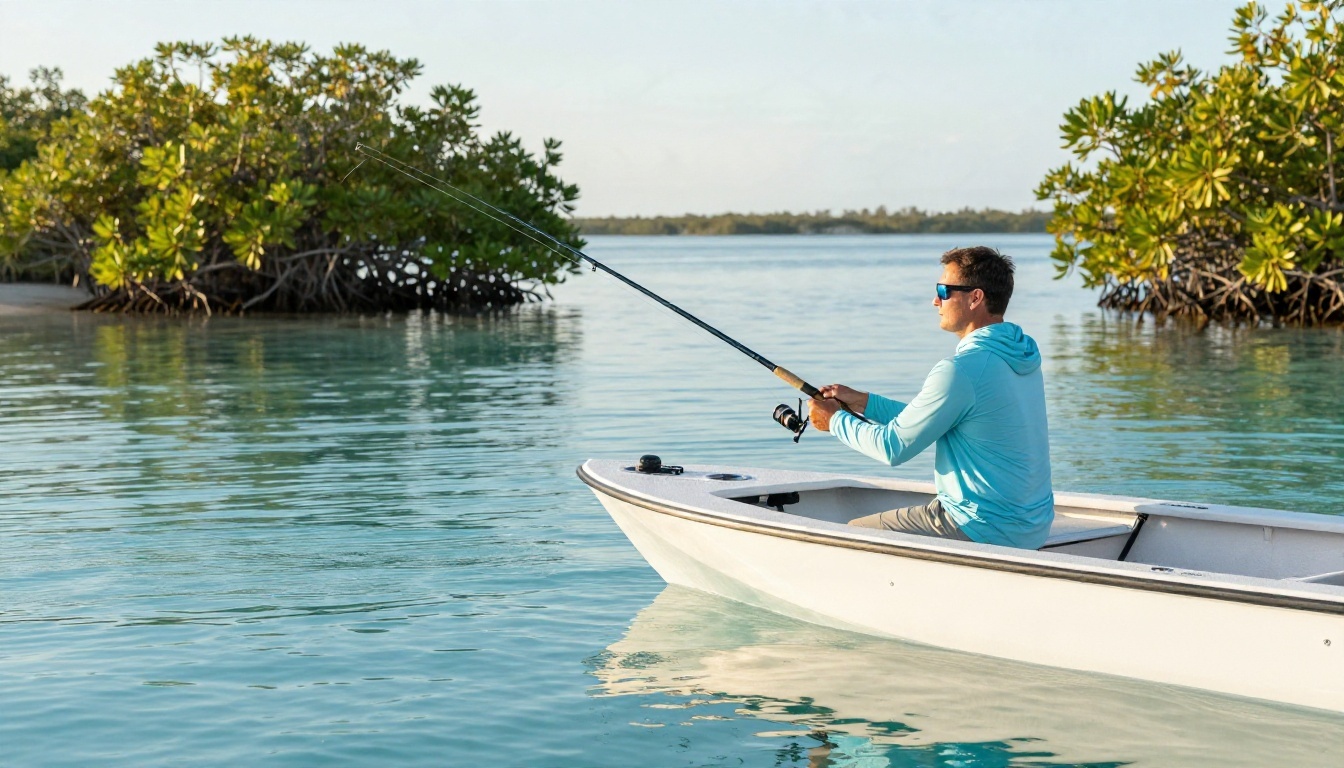
Along a mangrove shoreline, anglers may place casts near cover where fish can wait for passing prey. On a grass flat, they may work bait or lures over a broader area. Water level can affect which shallow spots are accessible and how fish move through them.
Beaches and passes connect the island shoreline with Gulf water. Farther outside, nearshore structure and moving bait can influence where the day's fishing develops. Conditions at any of these places can change, so a promising location on one trip won't necessarily fish the same way on another.
Tides, wind, waves, and visible bait activity all help shape the plan. A moving tide can make one area worth trying, while a shift in wind may make another more comfortable for the group. Bay waters can offer more shelter than the open Gulf, though they aren't immune to rough weather.
For guests interested in that setting, our Pine Island Sound bay fishing trips explore the waters behind the barrier islands.
Choose a trip that fits your target and group
Start with the experience you want as well as the fish you hope to catch. An inshore trip can suit guests who enjoy casting near shorelines and flats. A bay trip is a type of inshore fishing that emphasizes broader bays, sounds, and estuaries.
Nearshore fishing takes you outside the barrier islands and offers a more open-water setting. It's a good choice for guests comfortable with that exposure, but wind and sea conditions influence where the boat can go. A species-focused trip, such as a tarpon outing, gives the day a particular goal and may call for more patience than a general fishing trip.
Tell us your travel dates, fishing experience, preferred species, and how your group feels about open water. For families, it also helps to share the ages of younger guests and how long they'd like to spend aboard. These details help us plan around the people on the trip, not just the fish on the wish list.
Our inshore fishing charters offer half-day, three-quarter-day, and full-day options. Fishing trips include the license, gear, bait, and cooler, so you can focus on the day rather than assembling equipment for your visit.
Plan responsibly around seasons and fishing rules
A fish that's legal to catch isn't always legal to keep. Florida's recreational fishing rules depend on the species and can include harvest seasons, size requirements, and bag limits.
Harvest and catch-and-release trips
A closed harvest season doesn't necessarily mean you can't fish for that species. Catch-and-release fishing may still be an option when the applicable rules allow it. If taking fish home matters to your group, tell us before the trip so we can discuss what the day's plan allows.
For fish you release, keep handling brief and follow the captain's direction. Supporting a fish in the water and avoiding unnecessary handling can help you return it in better condition. For tarpon, in particular, the encounter should end with the fish in the water rather than being lifted for a photo.
State and federal waters
Location matters because fishing rules can differ between state and federal waters. Florida's Gulf state waters extend nine nautical miles offshore. Federal waters begin beyond that boundary, and regulations can differ by species and trip type.
The distinction is especially relevant for offshore reef-fish trips, but the same general principle applies closer to shore: the fish, location, and season all affect what you may keep. Rules can change, so our captain follows the applicable regulations for the trip and the catch.
Choose the Gulf fishing trip that suits you
Southwest Florida offers a wide range of fishing, with snook, redfish, and spotted seatrout in coastal waters and opportunities for tarpon and nearshore species around the islands. The day's conditions help determine which opportunities are available.
At Go & Get it Charters, we'll help you plan around the experience your group wants. Contact us to discuss your dates and fishing goals near Cape Coral, Sanibel, or Captiva.
Recent Posts
We got it.
Thank you for contacting us.
We’ll get back to you as soon as possible.