
How Tides Change Inshore Fishing Around Cape Coral
Cape Coral fishing tides change the depth of shallow water and the direction of tidal current, influencing where anglers can fish and where fish may feed. A shoreline, flat, or channel can offer a different experience as the water rises and falls.
You don't need to be an experienced angler to enjoy those changes. Understanding a few tide stages can help you plan a trip and appreciate the decisions made on the water.
Understand How Tides Affect Inshore Fishing
An incoming tide is the period when water rises toward high tide. An outgoing tide is when it falls toward low tide. The difference can be easy to see along a mangrove shoreline or on a shallow flat.
Water level and current are related, but they're not the same thing. The tide tells you how high the water is, while current describes how the water moves through a particular area.
A narrow pass or creek mouth may have noticeable flow while a nearby sheltered shoreline has less. Wind can also affect the water's movement and depth, so conditions may differ from what you expect from a tide prediction alone.
Moving water can carry food through an area and give fish a chance to feed near cover. It can also influence how you cast and how quickly your bait or lure travels.
Fish an Incoming Tide Along Shallow Edges
An incoming tide adds water to shallow areas that may have been difficult to reach earlier. As the depth increases, mangrove edges, grassy shorelines, and parts of a flat can become accessible to fish and anglers.
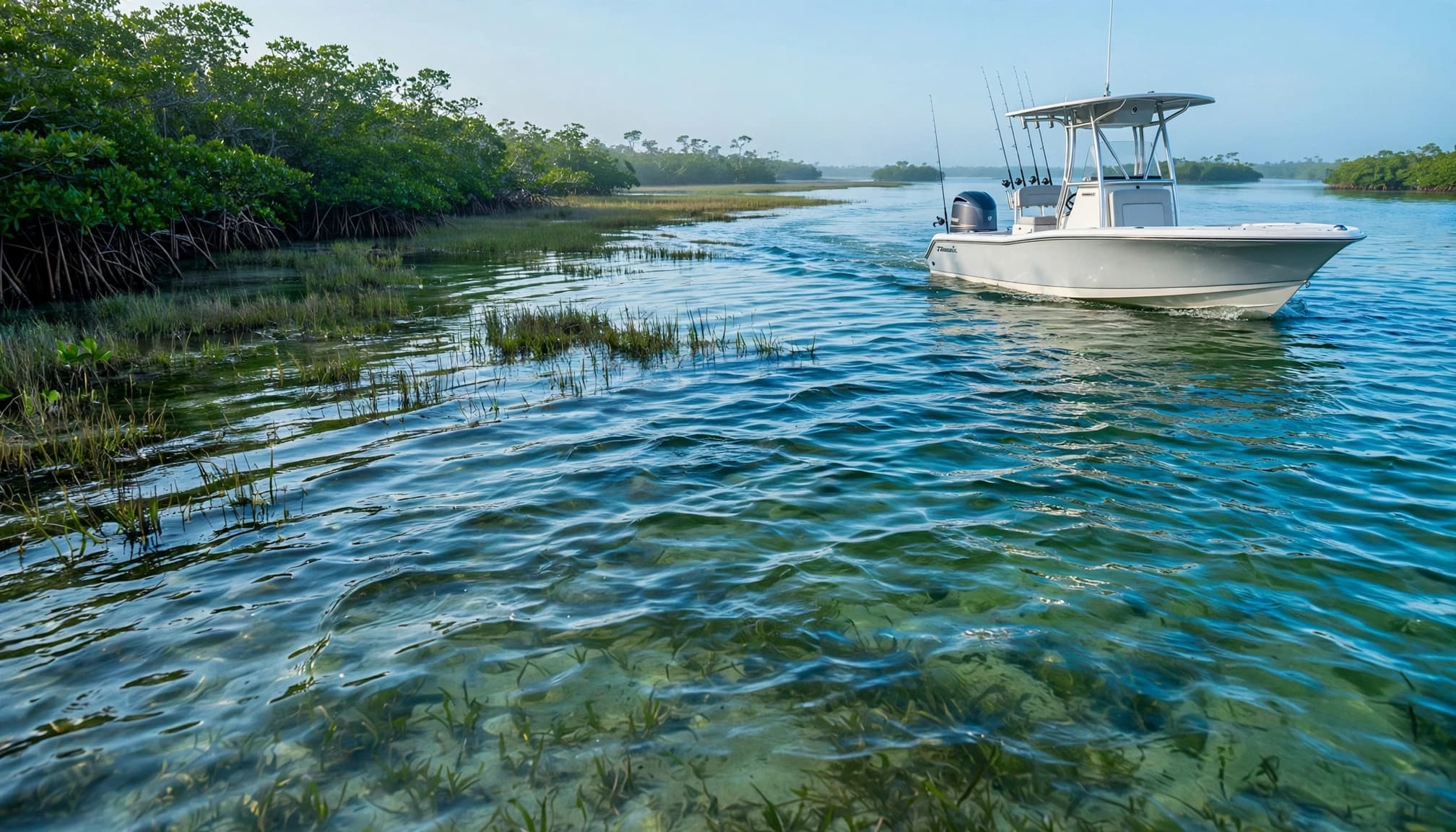
If you're fishing a shoreline, look for places where water meets cover or changes depth. A point, opening in the mangroves, or edge of a grass bed gives you a defined place to begin casting.
Water that was too shallow for a boat may become easier to approach, although depth can still vary across a flat. Seagrass and oyster habitat are sensitive, so choosing a route with enough water beneath the boat matters.
The rise doesn't guarantee a bite. If bait is visible but fish aren't responding, a different presentation or a move to another edge may be more useful than waiting in one place.
Follow the Water on an Outgoing Tide
As the tide falls, shallow shorelines and flats gradually lose water. Fish using those areas may move toward water that remains deep enough for them, including channels, troughs, and edges alongside the flat.
Creek mouths and openings between shorelines are places to watch when water is moving out. Current can carry shrimp and small baitfish through these areas, giving a fish near cover a chance to intercept food.
When casting, pay attention to the direction your bait travels. Placing it where the current can carry it past an edge or opening may create a more natural presentation than pulling it directly against the flow.
An outgoing tide also changes the boat's options. A route with enough depth at the beginning of a stop may become too shallow later, so allow room to leave before the water drops further.
Adjust Your Approach Around High Tide
High tide is the point when water reaches its predicted high level before it begins to fall. Around that change, the tidal current may slow, although the timing of slack water can differ from the time of high water.
The extra depth can make mangrove shorelines and shallow flats more accessible. Fish may have more room to spread out, so a productive approach could involve covering several edges instead of relying on one small opening.
If the water is moving slowly, give a bait or lure time near the cover you're fishing. A shrimp fished under a popping cork, for example, can stay in a likely area without settling directly into the grass.
A slow current doesn't mean the fishing has to stop. Bait activity, wind, shade, and the fish's response can all help shape the next cast.
Read Low Water and Find the Nearby Drop-Off
Low tide reveals parts of the shoreline and bottom that are harder to see under higher water. Exposed oyster edges, shallow bars, and the outlines of channels can help you understand the area.
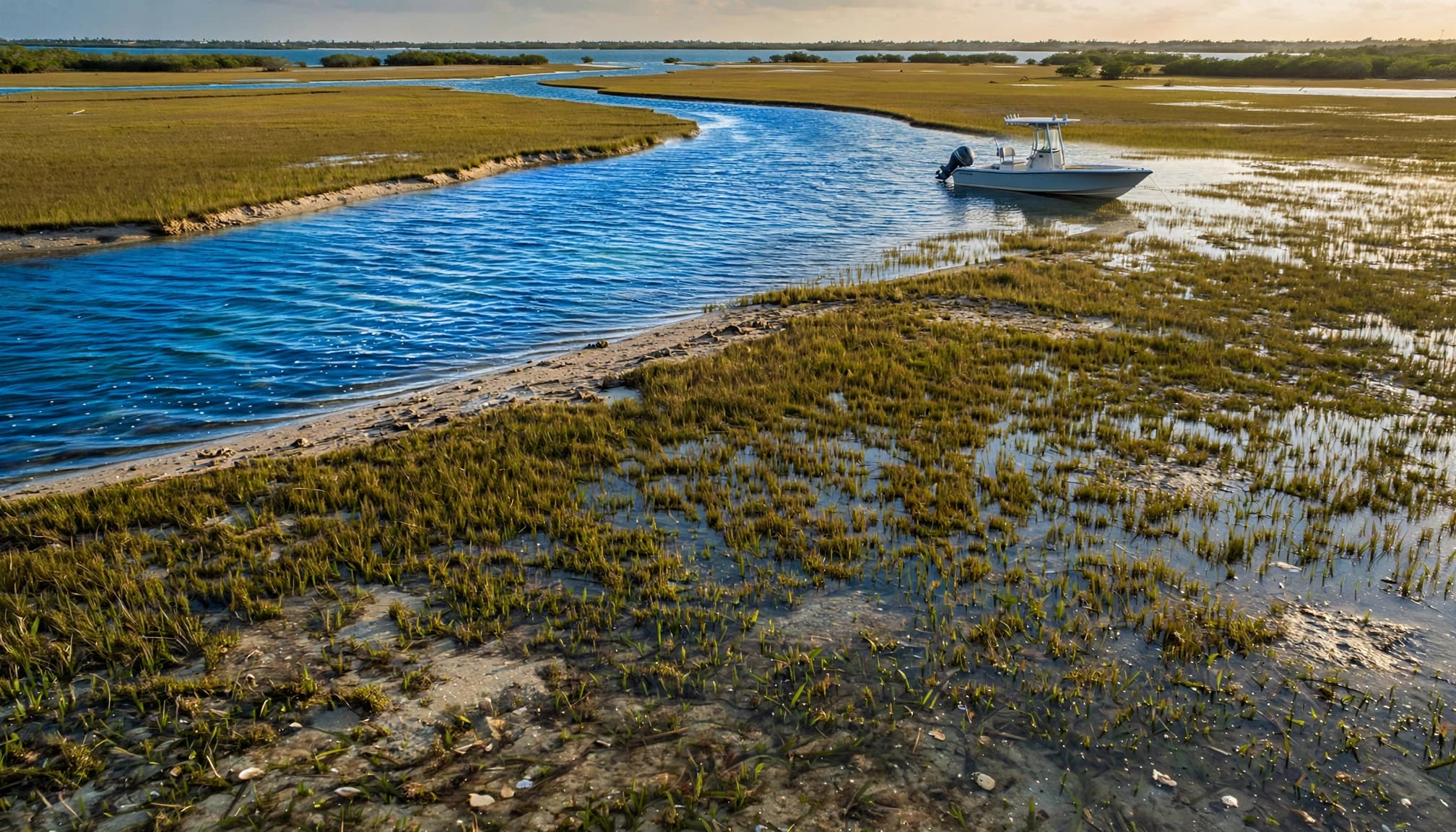
If a flat has little water over it, nearby channels and deeper troughs are places to consider. Fish can still use shallow water when conditions allow, so the useful depth depends on the location and the amount of water remaining.
Low water can also make boat access more limited. Staying in adequately deep water protects seagrass and reduces the chance of running aground. A flat that looks inviting for a cast may not have enough depth for the boat to cross.
As with high tide, the predicted low marks a turning point rather than a promise of immediate current. The water may begin rising before strong movement is noticeable at your fishing spot.
Match the Habitat to the Fish You Hope to Find
Cape Coral offers access to tidal waterways, mangrove shorelines, and broader waters connected to Pine Island Sound. Each setting gives you different places to look as the tide changes.
Mangroves and Structure for Snook
Snook use mangrove shorelines, beaches, seagrass beds, and other coastal structure. They can wait near cover as moving water carries prey past them.
A cast beside a point or near an opening gives the bait a chance to travel through water a snook might use. Our snook fishing charters focus on this species around Cape Coral, Sanibel, and Captiva, with the day's conditions guiding the approach.
Grass Flats for Redfish and Spotted Seatrout
Redfish use shallow coastal habitats that include grass, oyster areas, and sandy or muddy bottoms. Spotted seatrout are associated with seagrass and sandy areas, where they feed on shrimp and small fish.
Pine Island Sound has both grass flats and mangrove edges. A Gulf States Marine Fisheries Commission report on spotted seatrout describes the species' connection with estuarine habitats, including seagrass.
Water depth and clarity can affect how you fish these areas. A grass flat may call for a presentation that stays above vegetation, while a sandy opening gives you more room to let a bait sink.
Choose Bait and Lures for the Current
The same shrimp or lure can move differently as tidal flow changes. Adjusting its weight, depth, or speed can help you keep it where a fish has a chance to see it.
Live Bait in Moving Water
Live shrimp can be fished under a popping cork when you want to keep the bait above grass or other bottom cover. Set the depth so the shrimp stays clear of vegetation while remaining within reach of fish below.
In stronger current, a small weight can help keep a bait closer to the intended depth. Use only enough weight for the conditions, and watch whether the current carries the bait away from the area you're trying to fish.
Artificial Lures on Flats and Edges
A soft-plastic lure on a jig head can be worked along a channel edge or over a sandy bottom. A lighter jig head can help it stay higher over grass, while a heavier one may be useful in deeper water or stronger flow.
A shallow-running lure offers another way to cover a flat. If it's collecting grass, raise the rod tip or choose a presentation that runs nearer the surface. Let the depth and the fish's response guide the retrieve.
Use Cape Coral Fishing Tides to Plan Your Trip
Tide predictions give you a starting point for choosing when and where to fish. They list expected high and low water times and heights for a particular location.
Read the Prediction for Your Fishing Area
Start with a tide prediction for a station near the water you intend to fish. NOAA's Tides and Currents service provides predictions for coastal stations, and the station name matters because tide timing can vary between locations.
Look at the high and low times on either side of your planned outing. If low tide is predicted before your departure and high tide occurs during the trip, you can expect a rising tide for much of that window.
The predicted height also helps you compare how much water is expected at different times. It isn't a measurement of the water directly beneath a boat, since chart depths, location, and conditions all matter.
Leave Room for Changing Conditions
A tide table is a prediction, not a guarantee of the exact water level or current you'll encounter. Wind, weather, and the shape of the waterway can change what happens at a particular shoreline or pass.
If your schedule allows, a trip that includes part of a moving tide gives you a chance to fish as water levels change. A longer outing may include more than one stage, though it doesn't promise more fish.
Share your available dates and fishing interests when planning. That gives us a starting point for discussing a trip that fits both your group and the expected conditions.
Plan a Private Fishing Charter Around Your Group
A private fishing charter gives your group time together while Captain Andre guides the fishing. Beginners can learn where to cast and how to work a bait, while experienced anglers can discuss a favorite species or approach.
Our inshore fishing trips explore waters around Cape Coral, Sanibel, and Captiva. The fishing area depends on conditions, including tides and wind, as well as your group's interests.
A four-hour half-day trip is $600, a six-hour trip is $750, and an eight-hour trip is $900. Fishing trips include the license, gear, bait, and a cooler.
If a relaxed ride or a particular fish matters to your group, let us know when you arrange the trip. Conditions may change the plan, but your preferences help shape the day.
Frequently Asked Questions
Is an incoming or outgoing tide better for fishing?
Either can offer good opportunities. The more useful choice depends on the location, water depth, current, weather, and fish activity during your trip.
Can you fish around high or low tide?
Yes. Both stages can be worth fishing, although current may slow around a tide change. Adjust your location and presentation to the water you find.
Plan Your Day on the Water
The tide gives you a way to understand why a shallow shoreline, grass flat, or channel may fish differently throughout the day. Depth and current help guide the choices, while the fish and weather have their own influence.
To discuss a private trip around Cape Coral, Sanibel, or Captiva, call Go & Get it Charters at (239) 910-4449 . Share your dates and what you hope to experience, and we'll talk through the options.
Recent Posts
We got it.
Thank you for contacting us.
We’ll get back to you as soon as possible.