
Captiva Redfish: Where to Look in the Estuaries
Captiva redfish often feed around seagrass flats, oyster habitat, mangrove shorelines, and the mouths of tidal creeks. Each offers a different place to look, and water movement can help bring fish and food together.
Whether you are new to saltwater fishing or familiar with redfish, the surroundings are part of the experience. Understanding a few habitat clues can make each cast feel more purposeful, even when the fish are difficult to find.
Explore the Estuaries Behind Captiva
The waters behind Captiva are connected to a network of bays, flats, mangrove islands, and tidal waterways. Pine Island Sound lies between Pine Island and the barrier islands, with a mix of shallow habitat and broader stretches of water.
Redfish, also called red drum, can use several of these habitats during the same outing. A shoreline, a grass flat, and a nearby channel may all deserve attention, depending on water levels and the day's conditions.
The NOAA red drum habitat map shows how the species uses coastal waters across the Gulf region. Around Captiva, the useful details are often much closer: a break in the grass, a change in depth, or a shoreline point where water moves past.
Our bay fishing charters offer a way to experience these estuary surroundings while pursuing the fish available on the day.
Look for Redfish on Grass Flats
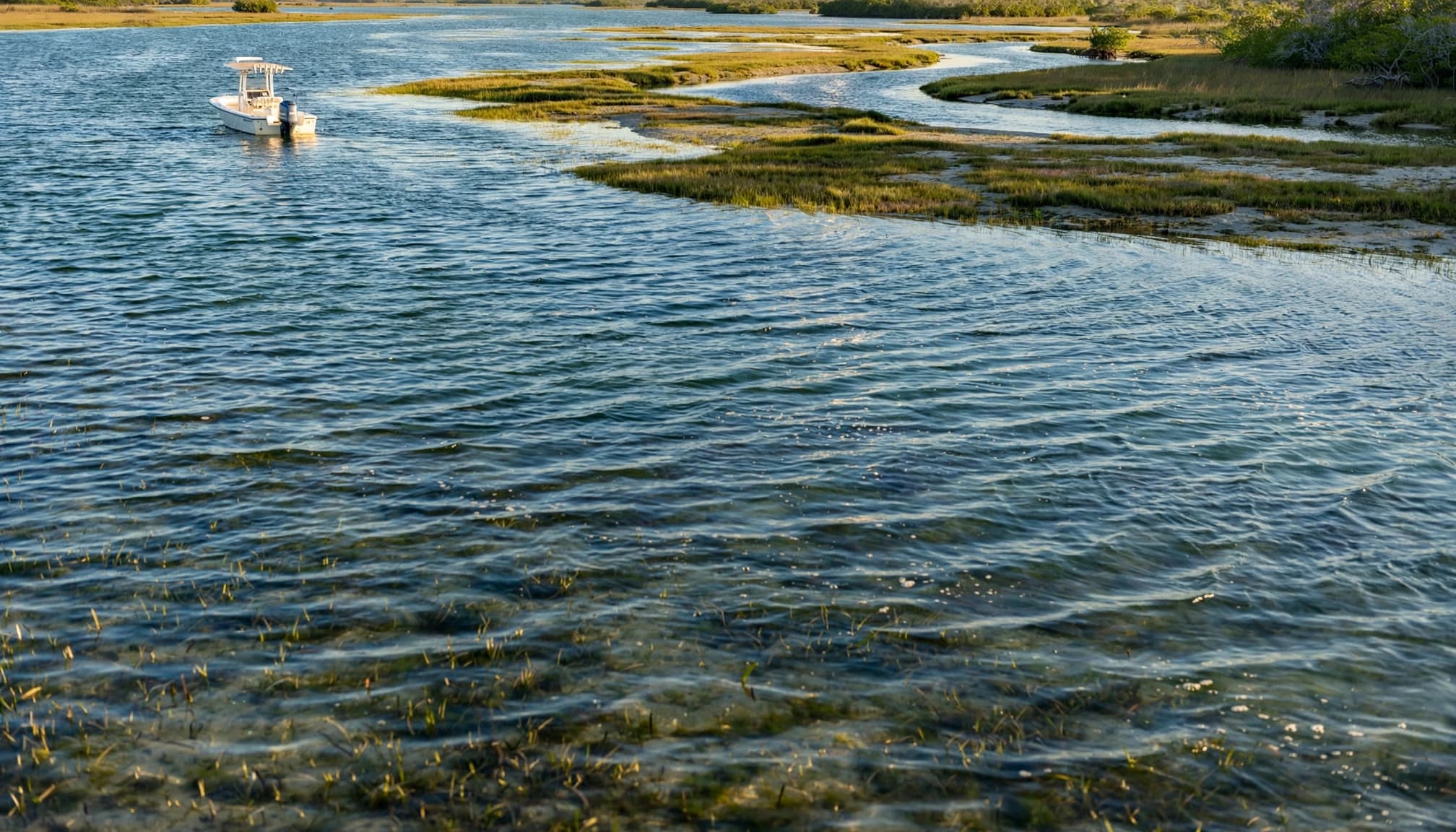
Seagrass flats give redfish room to search for food across shallow water. The grass also provides cover for small animals, so a flat can hold more activity than its quiet surface suggests.
Find Changes in the Bottom
A grass flat is rarely uniform. Sand patches, darker grass, and slightly deeper edges create features that can help you decide where to cast.
Look along the boundary where grass meets sand, rather than choosing a spot at random. A fish moving across the flat may pass through an opening or follow an edge, although its path is never predictable.
If the water is clear, polarized sunglasses can make these changes easier to see. The Florida seagrass habitat map offers a broader look at mapped grass areas, though it does not show where fish will be feeding on a particular day.
Approach Shallow Water Carefully
Redfish on a shallow flat may react to noise or sudden movement. A careful approach gives you more time to look before making a cast.
Keep the boat in water deep enough for safe operation, and avoid letting the propeller cut into seagrass. A long cast toward a promising edge can be more useful than bringing the boat directly over it.
Fish Oyster Bars and Mangrove Edges
Oyster habitat and mangrove shorelines give redfish places to search for food near structure. Both can be productive areas to explore, but each calls for attention to the water immediately around it.
Work Around Oyster Habitat
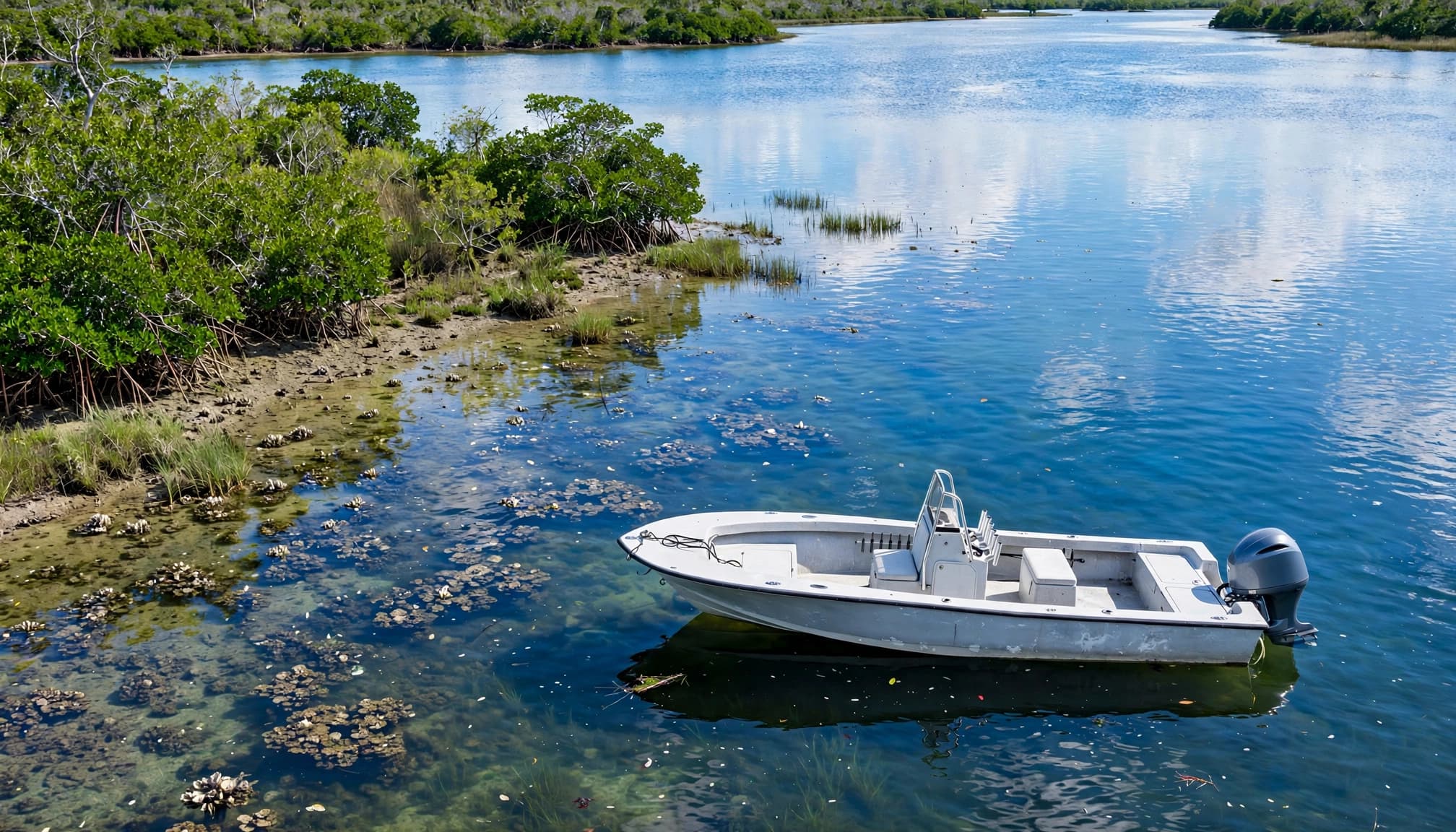
An oyster bar may be visible above the surface or hidden just below it. Its uneven edges create a change in bottom and depth that can concentrate small prey.
Rather than casting directly onto exposed shell, work the water beside the bar and along its ends. Those edges leave room to retrieve a bait or lure while keeping it close to the structure.
The Florida Fish and Wildlife Conservation Commission describes oyster reef habitat as supporting many coastal species. Oyster shells are sharp and shallow bars can be difficult to see, so give them room when positioning the boat.
Pay Attention to Mangrove Roots
Mangrove edges provide shade, cover, and a meeting place between the shoreline and open water. Redfish may feed near the roots or travel along the outside edge where they can reach nearby flats.
A point, opening, or small indentation can give you a useful target. Cast close enough to explore the edge, while leaving space to keep the line out of the branches and roots.
If a shoreline is quiet, look along its length rather than assuming every stretch will fish the same way. Nearby depth and moving water can make one part more appealing than another.
Explore Tidal Creek Mouths
A creek mouth is where a smaller waterway opens into a bay or flat. It can connect mangrove cover with more open feeding areas, giving redfish and their prey a route between habitats.
Water moving through the opening can carry food past the creek's edges. Look at both sides of the mouth, any nearby point, and the shallow water where the creek meets the surrounding bottom.
A cast across the edge of the current lets your bait or lure travel through more than one kind of water. The area just outside the opening may be as interesting as the creek itself, particularly where there is grass or oyster habitat nearby.
Creek mouths also vary in depth and width. Some are best observed and fished from the outside, where there is room for the boat and enough distance to approach without disturbing the shallows.
Follow Water Movement and Access
Tides change water depth and move water through the estuary. That affects where redfish can travel, how prey moves, and which areas a boat can reach comfortably.
Notice Where Water Has Room to Move
Points, creek openings, and gaps between habitat features can give moving water a defined path. These are useful places to watch for bait or surface activity.
A broad flat may look similar across a large area, while a nearby opening gives you a smaller place to concentrate your casts. If the water around that opening is moving, allow your presentation to pass naturally through it.
Current is one clue rather than a promise of feeding fish. Water clarity, wind, and the presence of prey also help determine whether a spot is worth spending time on.
Let Water Depth Guide the Approach
Changes in water level can make a shallow shoreline accessible to fish at some points and leave less room at others. A nearby edge or deeper route may provide a connection to the flat.
For anglers, depth affects both casting and boat position. Stay far enough away to cover the area without running across shallow grass or shell, and give the fish room to move.
The private charter planning guide describes how bays, flats, and other local waters can offer different experiences for a group. The route on a redfish outing depends on the conditions as well as the habitat you hope to explore.
Spot Signs of Feeding Redfish
A fish does not have to jump or strike at the surface to leave a clue. Patient observation can help you decide where to cast and when to give an area more attention.
Watch the Surface and Bottom
In shallow water, look for a small wake moving against the surrounding surface or a patch of disturbed bottom. A tail may appear above the water when a redfish feeds with its head down, although other fish can also create movement.
If you see a shape, take a moment to watch its direction. A cast placed ahead of the fish gives the bait or lure a chance to be noticed without landing directly on top of it.
Glare, wind, and cloudy water can make these signs difficult to see. You can still fish likely edges and openings when sight-fishing is not practical.
Pay Attention to Bait Movement
Small fish gathering along a shoreline or scattering across a flat can show that something is happening below the surface. Movement alone does not identify the predator, but it gives you a reason to watch.
Notice whether the activity stays near an oyster edge, follows a mangrove bank, or moves across open grass. Those details can help you choose a casting direction instead of repeatedly working empty water.
A quiet area can still hold fish. If there are no visible signs, a careful presentation along a promising depth change may reveal activity you cannot see.
Adjust for Weather and Seasonal Conditions
Water temperature, wind, and visibility can change the way an estuary fishes. A shoreline that is comfortable and clear on one trip may be difficult to approach on another.
Wind can ripple the surface and make fish harder to spot. It can also affect boat position and casting, so a more sheltered stretch of water may offer a better experience for your group.
In winter, the FWC red drum profile lists seagrass, sandy or muddy bottoms, oyster bars, and spring-fed creeks among the habitats redfish use. That range is a reminder to consider more than one kind of bottom when looking for fish.
Conditions vary throughout the year, and no calendar date guarantees a particular location or bite. Our inshore fishing charters can focus on redfish or leave room to pursue other available opportunities.
Choose a Presentation for the Habitat
Natural bait and artificial lures can both be used for redfish. The useful choice depends on the depth, the cover, and how comfortably you can place a cast.
Along a mangrove edge, accuracy matters because branches and roots can catch a line. On a grass flat, a presentation that can travel over the bottom without collecting too much vegetation may be easier to fish.
Near oysters, leave enough room for the line to clear the shell. A steady retrieve or a naturally moving bait gives you time to feel what is happening without pulling directly across the roughest structure.
If you are new to fishing, start with a manageable cast and pay attention to the retrieve. Experienced anglers may enjoy adapting their approach as the bottom changes, while beginners can focus on learning one presentation at a time.
When releasing a redfish, use wet hands, support its body, and keep handling brief. Give it time in the water before letting it swim away.
Captiva Redfish Questions
Do you need to sight-fish for redfish?
No. Watching for fish can be rewarding when the water is clear, but you can also cast to likely habitat when visibility is limited.
Can you plan a fishing charter around redfish?
Yes. Tell us that redfish are your priority when arranging your trip. The fishing area and approach will still depend on conditions and available opportunities.
Plan Your Day on Captiva's Estuary Waters
Grass flats, oyster edges, mangroves, and creek mouths each give you a place to begin looking. The most useful clue is how the habitat, water, and visible activity come together on the day.
Contact Go & Get It Charters to discuss your dates, your group's experience, and your interest in pursuing redfish around Captiva.
Recent Posts
We got it.
Thank you for contacting us.
We’ll get back to you as soon as possible.