
Baitfish Movement: Finding Coastal Gamefish
Baitfish movement can help you find coastal gamefish by showing where food is gathering, which direction it is traveling, and how predators may be feeding. A school near a mangrove point or a burst of activity along a beach can give you a place to start, although neither guarantees a catch.
Around Cape Coral, Sanibel, and Captiva, these signs can make a fishing trip engaging for new and experienced anglers alike. Start by looking at the bait's location, then watch how it behaves.
Find Baitfish Near Coastal Habitat
Baitfish use many of the same coastal areas that attract gamefish. Mangrove shorelines, grass flats, island passes, and beaches each offer places to look, but the activity can change with water level, current, and weather.
Along a mangrove edge, look for small ripples or flashes close to the roots. If a school is moving past a point or opening, a gamefish may use nearby cover to intercept it. A cast beside the cover can be a useful starting point.
On a grass flat, bait may be spread across a wider area rather than gathered in one tight school. Watch for movement near sandy patches, the edge of the grass, or a nearby drop into deeper water.
The Florida Fish and Wildlife Conservation Commission's saltwater fishing tips identify flats as habitat for species including snook, red drum, and spotted seatrout. Our inshore fishing charters explore these kinds of coastal waters, with the day's approach shaped by conditions.
Read Surface Activity and Birds
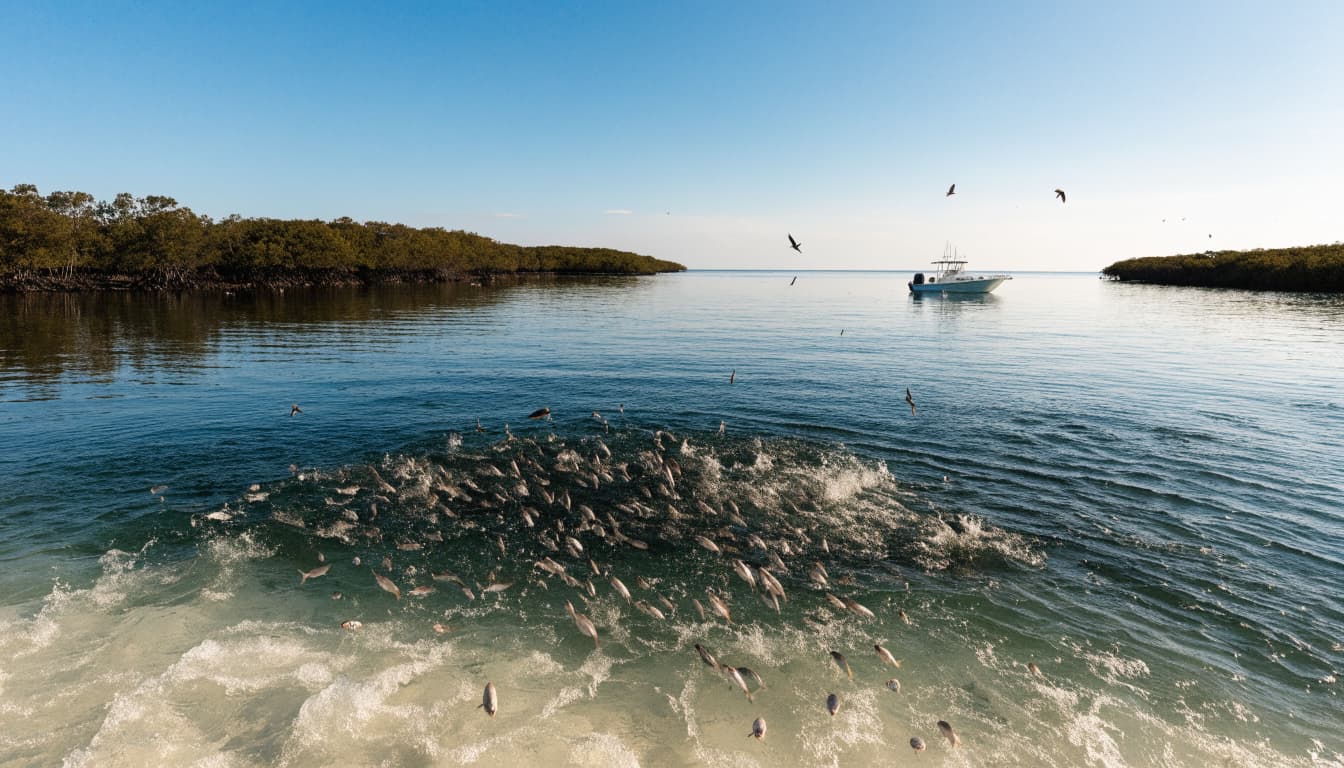
The surface can reveal activity that would be difficult to see underwater. Spend a moment watching before casting, especially when the water is calm enough to show small changes.
Notice Ripples and Sudden Splashes
A fine, nervous texture on the water may come from small fish moving near the surface. Larger splashes, scattered bait, or repeated boils can suggest that something is feeding nearby.
Watch for the activity to repeat before deciding where to cast. Wind, waves, and fish feeding at the surface can all disturb the water, so a single splash leaves plenty of room for interpretation.
Watch How Birds Feed
Diving birds can point you toward bait that is difficult to see from a distance. NOAA's guide to marine debris describes seabirds feeding over schools of baitfish, although birds alone do not tell you what is swimming beneath them.
Look for repeated dives in one area and observe whether the activity is moving. Approach slowly, give the birds room, and avoid casting into them. A quiet approach also gives you a better chance to watch the school before it changes direction.
Follow the School's Direction
A patch of bait is more useful when you know where it is going. Pick a fixed reference, such as a mangrove point or a feature on the shoreline, and watch whether the surface activity moves toward or away from it.
If the school is traveling steadily along a beach, position ahead of its path rather than driving through it. Leave enough distance for a cast and let the bait come within range. This approach can keep the school in view without scattering it.
A school moving into an inlet or past a shoreline point may draw attention to an edge where gamefish can wait. Place a cast near that edge, then retrieve through the area where the bait is traveling.
Direction can change quickly. If the disturbance turns, sinks, or disappears, pause and look around before following the last splash. Birds, current, and the next patch of surface movement may show where the activity has shifted.
Use Current Edges to Choose Position
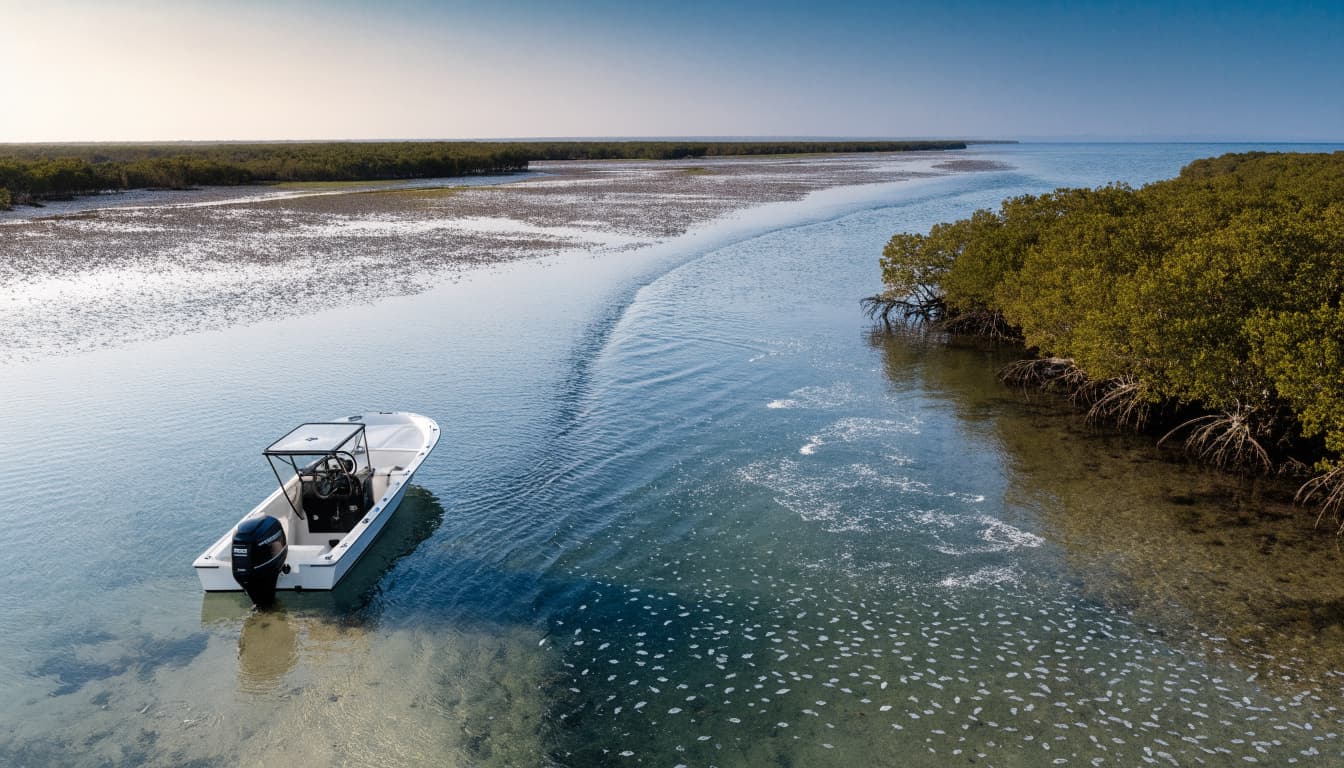
Moving water carries food through the coast's connected bays, passes, and shorelines. Where that flow changes around structure, bait and gamefish may come close together.
Look for a Current Seam
A current seam is a visible boundary between areas of water moving at different speeds or in different directions. You may see a line of ripples, foam, or floating material where the flows meet.
A mangrove point or the edge of a channel can create a place like this. Bait may move along the faster water while a predator waits nearby, so a cast across the seam lets your lure travel through both sides.
Cast Along the Edge of Cover
Snook often use mangrove shorelines, beaches, and other structure. Moving water can carry prey toward a fish waiting near cover, which makes the edge of that cover a useful place to present a bait.
Position far enough away to cast without pushing the boat into the area. Let your bait or lure move naturally with the flow where possible, and pay attention to whether the line is carrying it away from the target. Our snook fishing charters focus on this fish and the coastal habitat it uses.
Consider How Deep the Bait Is
Bait at the surface is easy to notice, but a quiet surface does not mean the water below is empty. The depth of the school helps determine where to place your lure or bait.
Fish Near Visible Surface Bait
If small fish are dimpling the surface, start with a presentation that stays near that level. A light lure retrieved through the edge of the school gives you a way to cover water without sinking beneath the activity.
Watch for strikes around the outside of the school as well as in its center. Gamefish may approach bait at different angles, and a cast beyond the activity can bring your lure back through the edge.
Look Below the Surface
In deeper water, a fish finder may show a concentration of bait beneath the boat. Those marks are clues rather than proof of the fish species present, but they can help you choose a useful depth.
If the bait appears below the surface, try a weighted lure or a bait presented at a similar level. Count down before retrieving, or adjust the weight so the presentation reaches the school without dragging along the bottom.
Notice Changes in Bait Behavior
The way a school moves can tell you as much as its location. Bait swimming in a loose, steady group may be traveling or feeding, while sudden scattering can suggest a disturbance nearby.
A school that tightens, breaks apart, or pushes against the surface deserves a closer look. Larger fish may be underneath, although birds, boat traffic, and other disturbances can also change the bait's behavior.
If the school settles after a burst of activity, give the area a little time. A predator may pass through again, or the bait may resume moving toward another piece of structure.
When the signs disappear and several casts produce no response, adjust your approach. Change the casting angle or depth, then look for another concentration of bait if the area stays quiet. The goal is to respond to what you can see, rather than remain in one place because it looked promising earlier.
Match Your Presentation to the Bait
You do not need an exact imitation of every small fish in the water. Start with a lure or bait that is reasonably close to the size and general appearance of the baitfish you can see.
Choose a Lure for the Water
A small silver-colored lure can resemble the flash of baitfish in clear, open water. A soft-plastic bait on a jig head offers more control over depth when the school is holding lower or when current makes a light lure difficult to manage.
Near a grass flat, retrieve at a height that keeps the lure above the vegetation. Along a deeper channel edge, allow it to sink before bringing it back. Change one part of the presentation at a time so you can tell what makes a difference.
Adjust the Retrieve or Use Live Bait
When baitfish are moving quickly, a steady retrieve may keep your lure in the active area. If the school is moving slowly or fish are reluctant, try a slower retrieve with brief pauses.
Live bait can also be presented near a school or along its likely path. Keep the bait where you expect gamefish to encounter it, and use enough weight to reach the desired depth without restricting its movement more than necessary.
Connect the Signs to Local Gamefish
Different habitats offer opportunities for different species. The same baitfish clue can lead to a different approach depending on whether you are fishing a sheltered shoreline or open water near the islands.
Explore Shorelines and Flats
Snook may use shoreline cover where moving water carries prey past them. Redfish, also called red drum, use shallow areas with seagrass, oyster habitat, and sandy or muddy bottoms.
Spotted seatrout are often pursued over grass flats and sandy areas. If bait is spread across a flat, covering the edge of the grass with several casts can help you explore more water without disturbing the whole area.
Watch Beaches and Nearshore Water
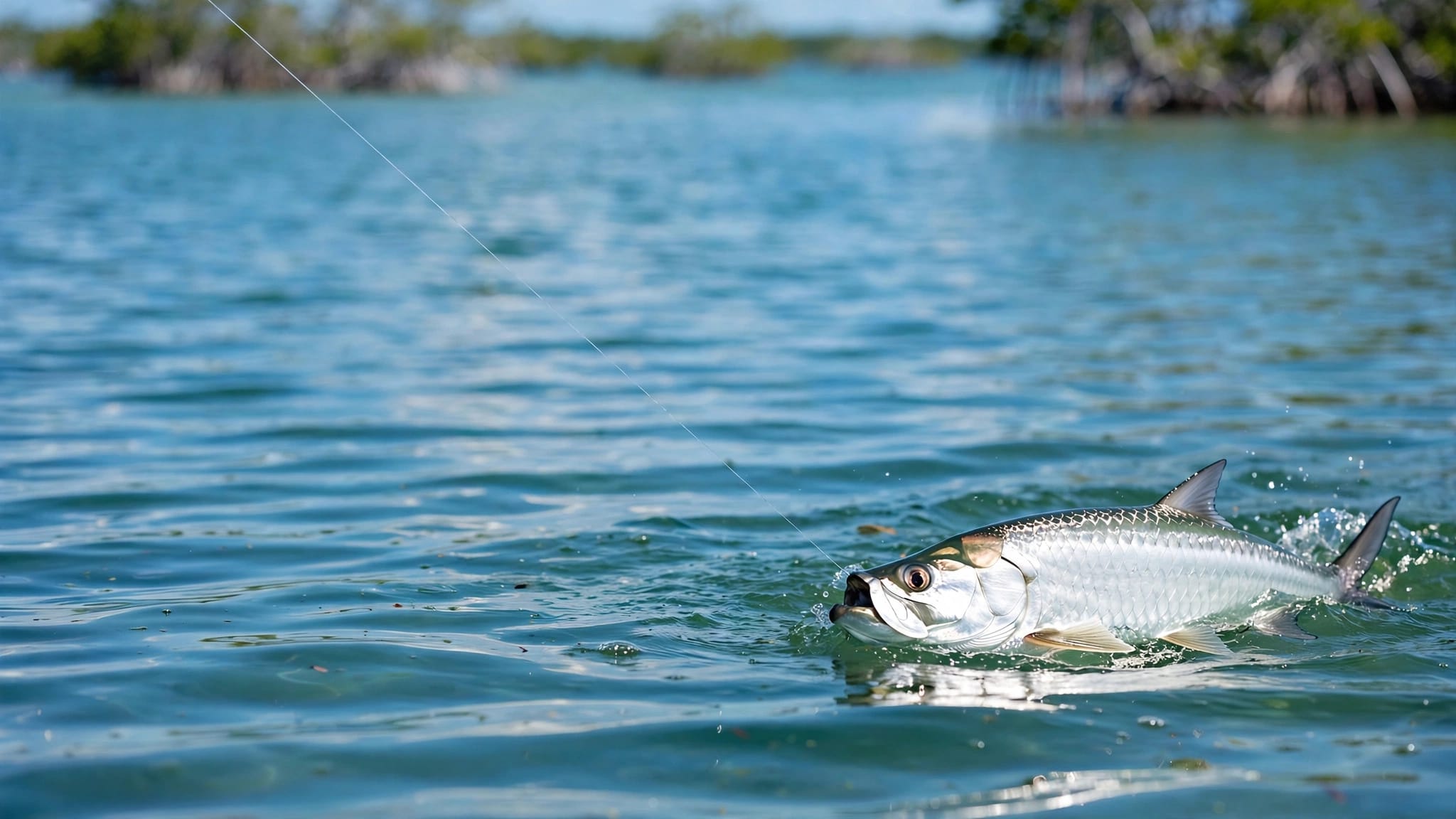
Tarpon are pursued along beaches and in other coastal waters when conditions and seasonal movements create opportunities. Our tarpon fishing trips near Sanibel give anglers a chance to focus on that pursuit.
Spanish mackerel are another possible target, with fast-moving schools often associated with baitfish. On a nearshore fishing trip, visible bait and bird activity may help guide the search, although wind and waves also influence where it is comfortable to fish.
Key Takeaways
Location, direction, depth, and behavior work together. Bait beside a mangrove point suggests a different cast than a school moving along a beach, and bait below the surface calls for a different presentation than bait on top.
Use each sign as a reason to try an area, then adjust if the school moves or the conditions change. A promising clue is part of the experience, not a promise of a catch.
Baitfish Movement Questions
Do birds always mean gamefish are feeding below?
No. Birds may be feeding on baitfish without larger fish nearby. Repeated dives give you a place to observe, but the surface activity and your fishing results provide more context.
Can you find gamefish when bait is not visible?
Yes. Bait and gamefish can remain below the surface, especially in deeper water. A fish finder, nearby structure, and moving water can help you choose where to try, even when the surface looks quiet.
Plan Your Day on the Water
Following baitfish adds another layer to a Southwest Florida fishing trip. A moving school, a current edge, or a change in depth can help shape the next cast.
If you are planning a private fishing charter near Cape Coral, Sanibel, or Captiva, tell us about your group's experience and the fish you hope to pursue. We can discuss an outing that fits your interests and leaves room for the day's conditions.
Recent Posts
We got it.
Thank you for contacting us.
We’ll get back to you as soon as possible.