
Choose a Sanibel Fishing Charter for a Mixed-Ability Group
Choose a Sanibel fishing charter by matching the water, trip length, and fishing approach to everyone coming aboard. A private outing can give beginners time to learn while experienced anglers pursue their interests, with conditions helping shape the plan.
If your group includes children, first-time boaters, or people who prefer watching between turns, those preferences belong in the planning conversation. Start with shared comfort , then consider the fishing opportunities that suit your group.
Key Takeaways
A suitable charter gives everyone a way to enjoy the outing without expecting the same level of participation.
- Choose the fishing setting around boating comfort, rather than experience with a rod alone.
- Match the trip length to attention spans, stamina, and the time your group wants outdoors.
- Discuss instruction, target species, equipment, and safety together so the plan accounts for everyone aboard.
A private trip offers flexibility, although weather, tides, and fish activity still influence the experience.
Start With the People Coming Aboard
Before choosing a fishing destination, describe who will share the boat and what each person hopes to experience. Fishing experience and boating comfort are separate considerations.
Describe Experience and Comfort Separately
Someone who fishes freshwater regularly may still be unfamiliar with saltwater tackle or an open-water ride. A first-time angler may feel comfortable aboard but need help understanding how the reel works.
Share the ages of younger guests, previous boating experience, and any concerns about balance, heat, or motion. These details help shape a more useful conversation than describing the whole party as beginners.
If someone needs assistance boarding or standing for extended periods, explain what support they need. The actual task matters more than a general description of ability.
Agree on a Shared Priority
Your group might value learning to cast, spending time together, or pursuing a particular species. Choose a shared priority while leaving room for individual interests.
If one person wants tarpon and everyone else wants an introduction to fishing, discuss that difference early. A species-focused outing can involve a pace and approach that may not appeal equally to everyone.
Decide whether the group would rather concentrate on that pursuit or remain open to other fishing opportunities.
Choose Water That Suits Your Group
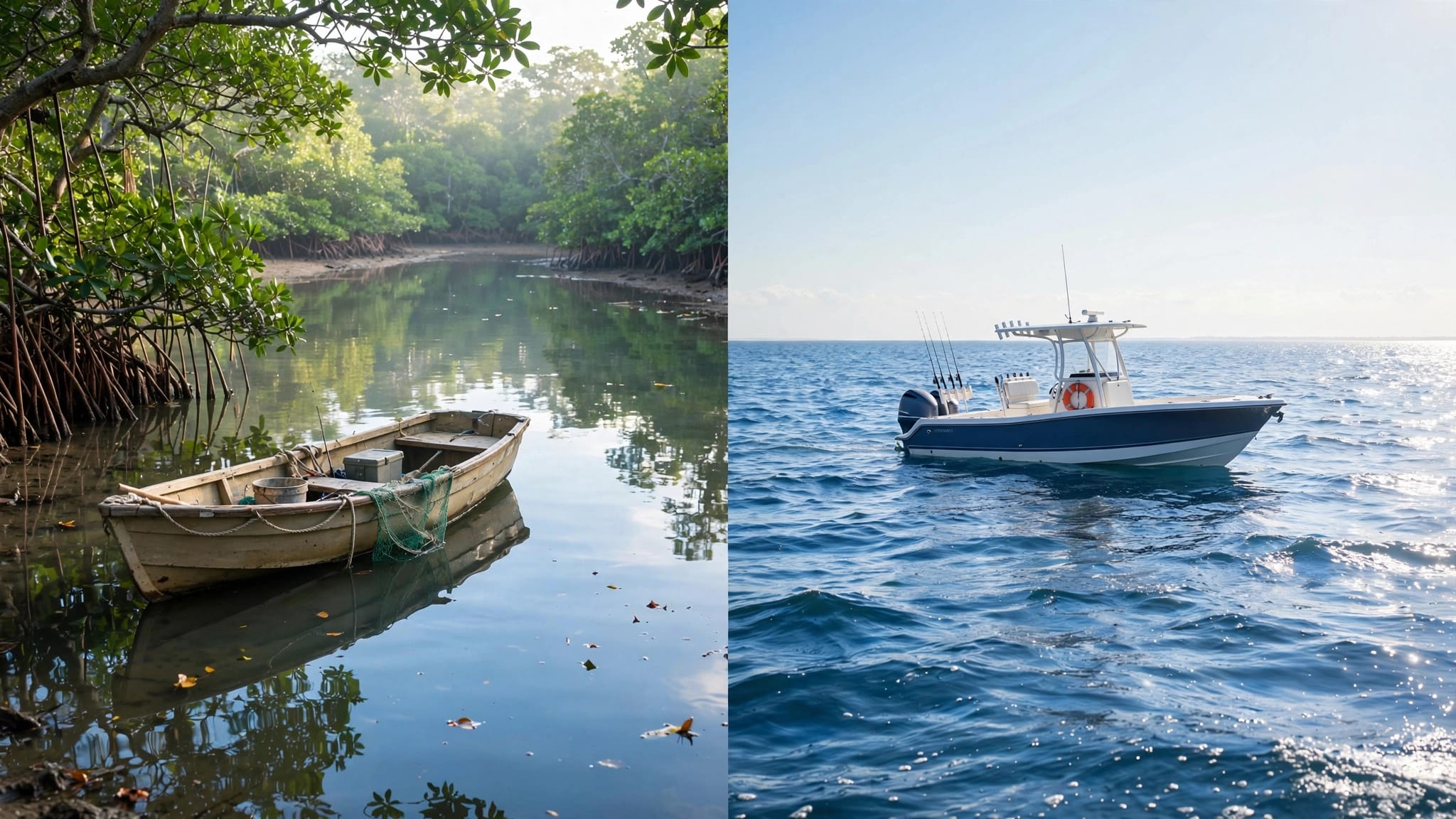
The setting changes both the ride and the fishing experience. Around Sanibel, the barrier islands provide a useful distinction between inshore waters and the coastal Gulf.
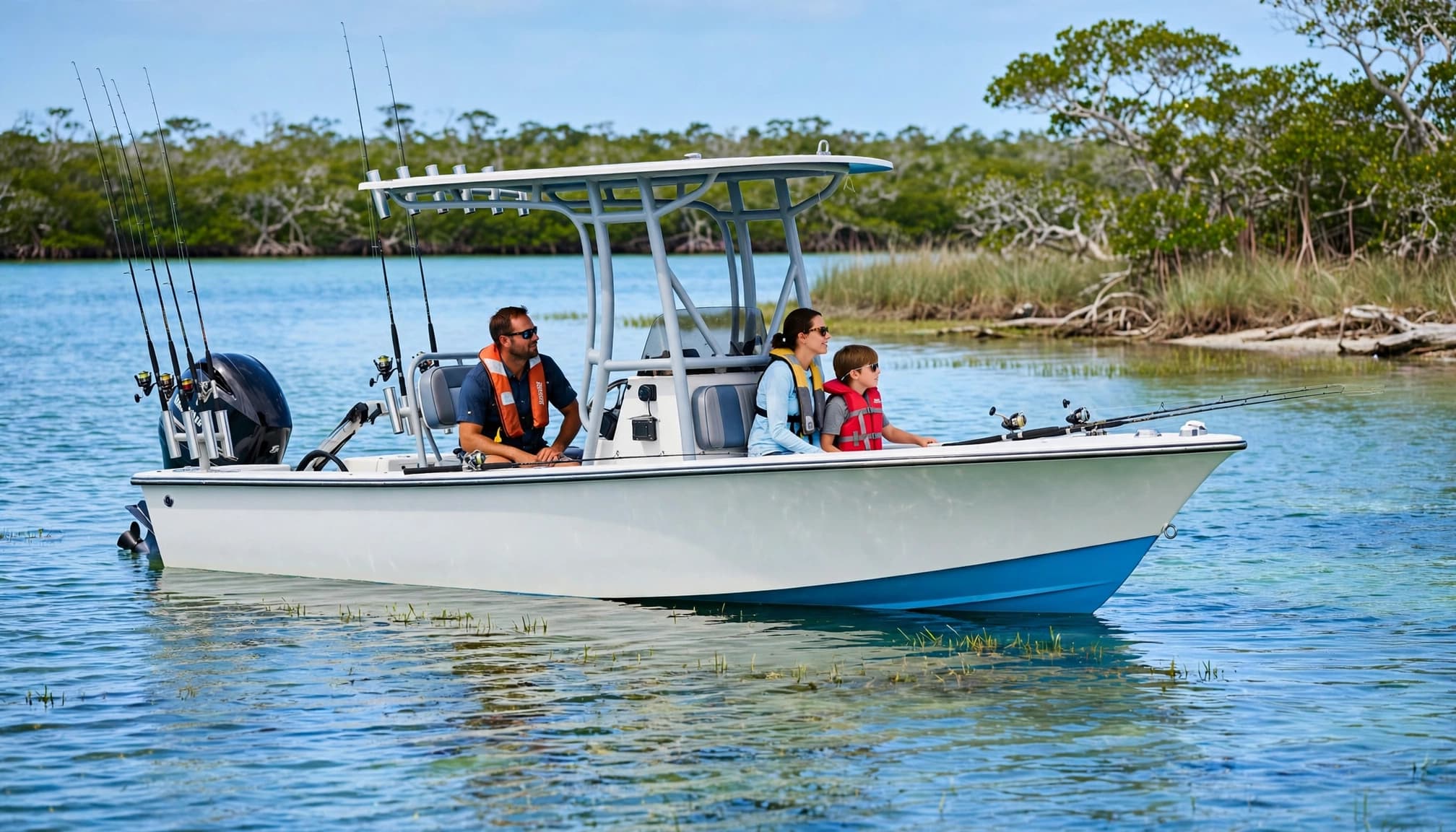
Illustrative boating scene, not our charter vessel or guests.
Consider Inshore and Bay Waters
Inshore fishing includes coastal shorelines, shallow flats, bays, and tidal waterways. Pine Island Sound, between Pine Island and the barrier islands, includes mangrove edges, seagrass beds, and oyster habitat.
These surroundings can suit groups interested in coastal scenery and fishing close to varied habitat. Waters inside the islands may provide more shelter than the open Gulf, although wind still affects the ride.
Experienced anglers can remain engaged by paying attention to casting placement, current, and how fish use nearby structure.
Understand Nearshore Exposure
Nearshore fishing takes place outside the barrier islands in coastal Gulf waters. Being relatively close to land does not remove exposure to wind and waves.
Our guide to nearshore fishing trips describes this more open setting. It can appeal to groups comfortable with open-water boating, while a more sheltered approach may suit others.
The National Weather Service marine forecasts address marine conditions that a general vacation forecast may not capture. A sunny day alone does not describe the ride your group may encounter.
Match Trip Length to Stamina and Interest
Our fishing trips offer four-, six-, and eight-hour options. The useful comparison is how comfortably your whole group can spend that time aboard.
A four-hour trip is a practical starting point for first-time anglers, younger guests, and anyone uncertain about a longer outing. It provides time for an introduction while leaving room for other plans.
Six hours gives your group a longer outing without committing to a full day. Eight hours may suit people who want fishing to occupy most of their day and feel comfortable spending that time outdoors.
Additional hours allow more time for travel, fishing, and adjustments, but they do not guarantee additional catches. Consider how much time your least enthusiastic participant would willingly enjoy aboard.
When discussing duration, ask how the trip might balance travel, instruction, and fishing. Our fishing trip planning guide brings those choices together with the different water settings.
Ask How Instruction Fits Different Skill Levels
A mixed-ability trip works better when assistance follows each person's needs. Beginners may want a demonstration, while experienced anglers may prefer guidance about local conditions.
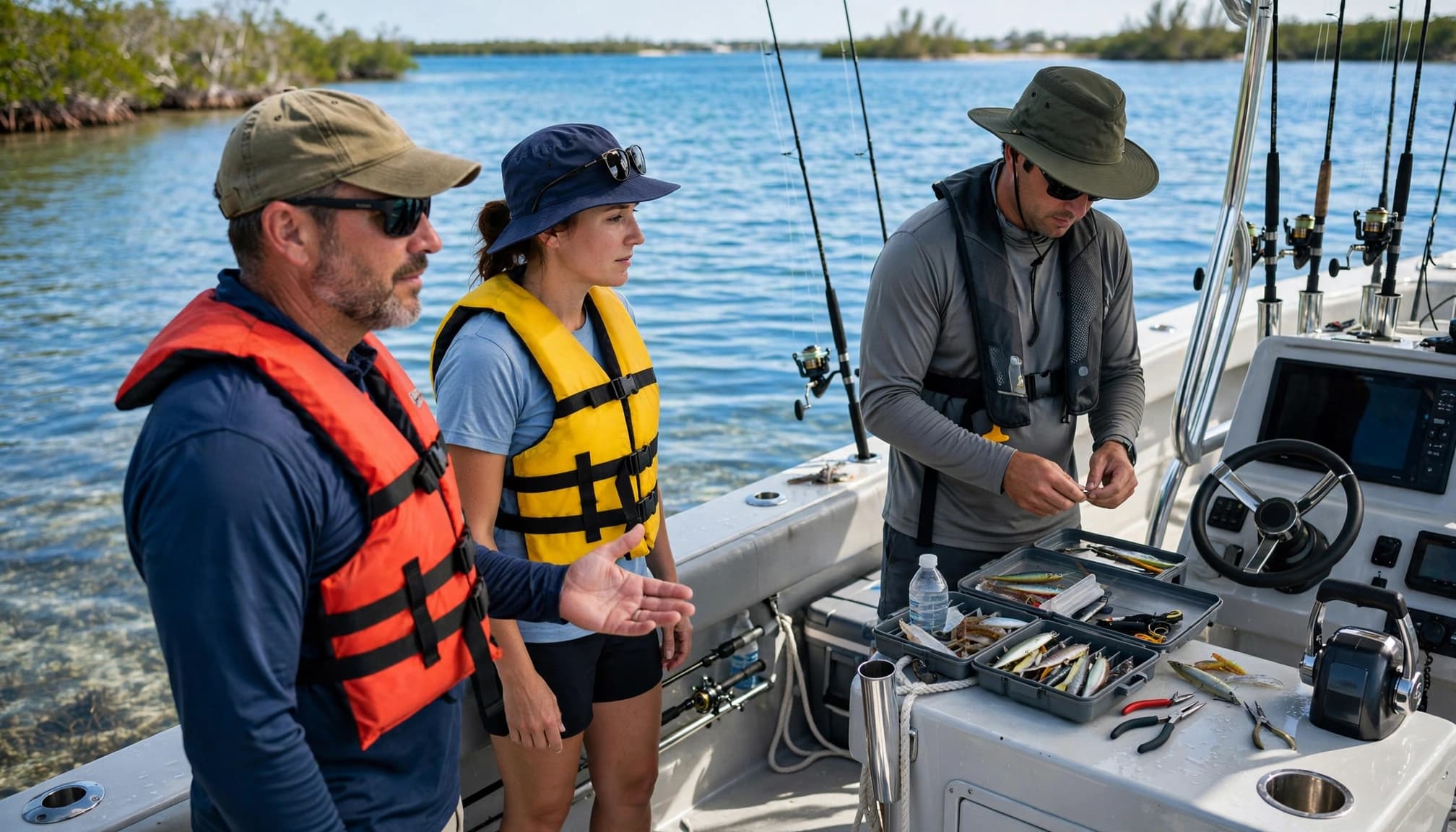
Illustrative scene, not our captain or guests.
Give Beginners a Clear Starting Point
Ask how casting, using the reel, and recognizing a possible bite will be introduced. A short explanation followed by practice can make unfamiliar equipment easier to understand.
Discuss how much help each person wants with baiting hooks, adjusting tackle, and handling a fish. Some guests enjoy learning every step, while others prefer concentrating on the rod and line.
Our explanation of private charters for first-time anglers describes how instruction and pauses can fit into the outing. Watching for a while can be part of learning, too.
Leave Room for Experienced Anglers
Experienced anglers can share the techniques they enjoy and the skills they want to practice. That gives the captain something more useful than a general request for challenging fishing.
A helpful question is, "How could someone practice casting independently while another person receives instruction?" The answer should account for safe spacing and the fishing approach.
If several people want assistance at once, taking turns may provide a more manageable pace. Equal enjoyment does not require everyone to fish continuously.
Discuss Comfort and Safety Before the Trip
Comfort needs influence where a group can fish and how much energy remains for the experience. Bring them into the conversation alongside target species and trip length.
Explain Practical Needs Clearly
Describe concerns about boarding, maintaining balance, sitting between turns, or spending extended time in the sun. Questions about seating, shade, and restroom arrangements are useful when those features affect someone's participation.
If motion sickness has affected previous outings, mention that history when discussing inshore and nearshore options. Sheltered water may reduce exposure, but no setting guarantees a motion-free ride.
Bring sun protection and clothing suited to the forecast. Anyone considering motion-sickness medicine should discuss a suitable option with a pharmacist or clinician.
Include Everyone in the Safety Briefing
Ask how the captain introduces safe movement, casting space, and the response to changing weather. Children and adults who are new to boating should understand the explanation before fishing begins.
Discuss life-jacket fit and any assistance someone needs during the briefing. Safety instructions should account for how each guest hears, understands, and follows directions.
The National Weather Service's boating preparation guidance covers hazards and safety preparation. If conditions call for changing the route or postponing the outing, those decisions take priority over a preferred fishing location.
Set Expectations for Fish, Equipment, and Participation
A preferred species gives the trip direction, but a mixed group also benefits from understanding what the pursuit involves. Equipment and harvest expectations belong in the same conversation.
Compare Fishing Goals With the Required Approach
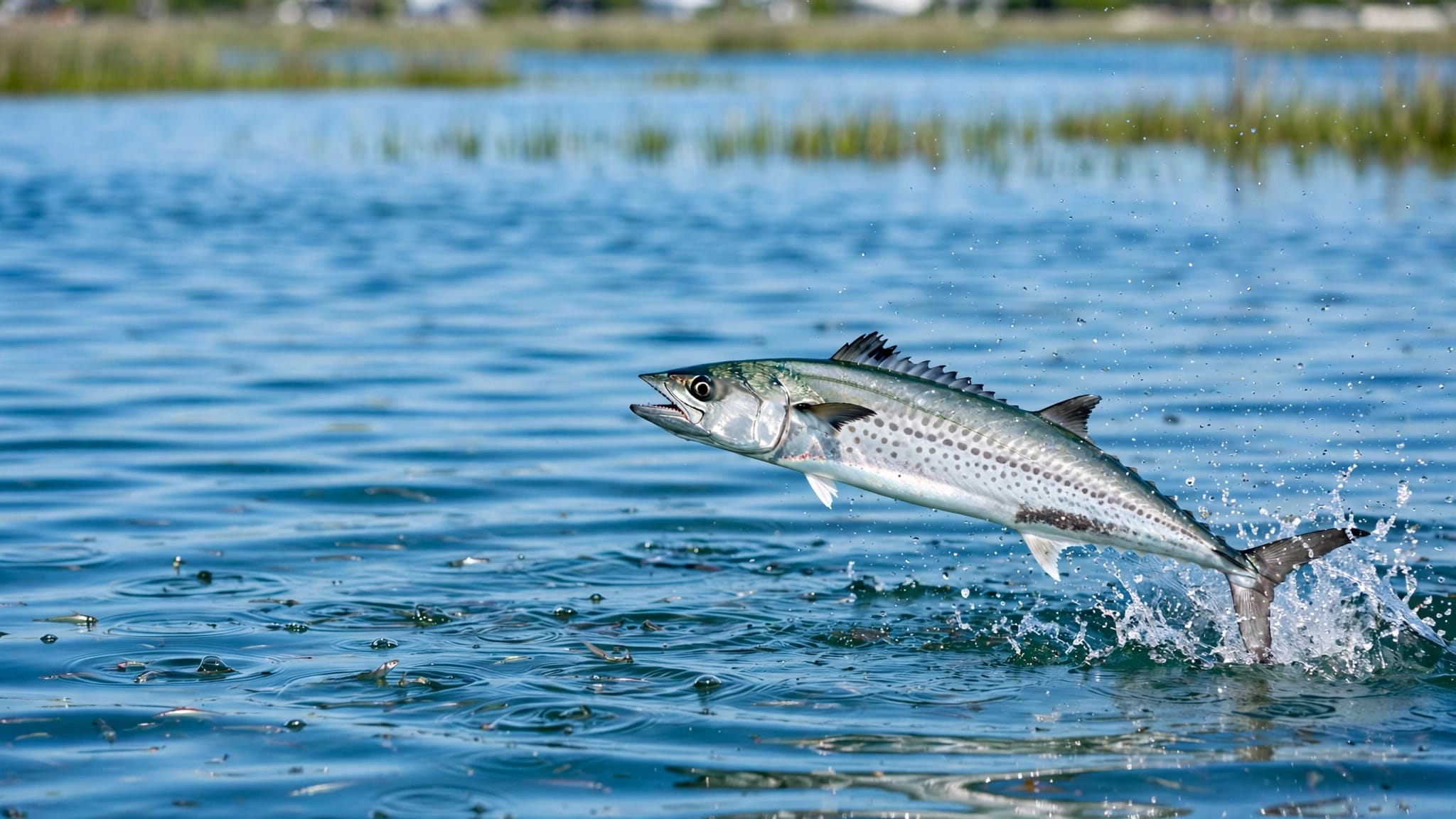
Snook, redfish, spotted seatrout, and tarpon are among the fish associated with Southwest Florida's coastal waters. Their availability and the appropriate approach depend on conditions and fish activity.
Snook use habitats that include mangrove shorelines and structure, while spotted seatrout inhabit coastal waters over grass and sandy bottoms. Different targets can involve different presentations, casting demands, and periods of waiting.
Ask, "Which approach suits our group's abilities, and what other opportunities could fit if the original plan becomes less practical?" That keeps a preferred fish in the conversation without treating it as a promised catch.
Discuss Tackle and Catch Expectations
Talk through the rods and reels each person will use, particularly when grip strength or fatigue affects participation. Equipment should allow the angler to participate comfortably in the intended fishing approach.
Discuss who will bait hooks, manage tackle changes, and assist with fish handling. These tasks can be shared differently according to interest and ability.
Florida's FWC charter licensing guidance explains that passengers covered by a valid charter captain or boat license do not need individual recreational saltwater fishing licenses.
If keeping an eligible fish matters, include that preference when describing your goals. A preferred meal should not become an expectation that every outing will provide fish to take home.
Questions About Mixed-Ability Fishing Charters
Can beginners and experienced anglers enjoy the same private trip?
Yes. Beginners can receive help with the basics while experienced anglers work on casting, presentation, or understanding local habitat. A shared plan works best when everyone accepts that assistance, turn-taking, and changes of approach may be part of the experience.
Is a four-hour trip enough for a first fishing outing?
Four hours can provide a suitable introduction without committing the group to a full day aboard. Six- and eight-hour trips offer more time, but duration should follow the group's comfort and interests rather than an expectation of better catches.
Plan a Day Your Whole Group Can Enjoy
A suitable charter brings the group's abilities, comfort needs, and fishing interests into one practical plan. Choose a setting and duration everyone can enjoy, with flexibility for the conditions.
Call us at (239) 910-4449 to discuss your dates, the people coming aboard, and the experience you have in mind.
Recent Posts
We got it.
Thank you for contacting us.
We’ll get back to you as soon as possible.