
What Affects the Cost of a Cape Coral Fishing Charter?
The cost of a Cape Coral fishing charter depends on the trip length, fishing area, group size, operating costs, and what the booking includes. Choosing a trip that suits your group starts with understanding those differences, then comparing the complete package rather than the advertised amount alone.
Whether you want a relaxed introduction to local fishing or a longer day pursuing a favorite species, there are several ways to shape the experience. Start with the time you want on the water and the kind of outing everyone will enjoy.
Start With the Trip Length
The amount of time reserved for your group is one of the clearest differences between charter options. Our inshore trips include half-day, three-quarter-day, and full-day outings.
Choose Time That Suits Your Group
A half-day trip can fit comfortably into a vacation that includes other activities, particularly when someone aboard is new to boating. A longer outing gives your group more time to settle into casting, learn an approach, and explore the available fishing opportunities.
If fishing is the main reason for your visit, additional time may suit your plans. Keep everyone's comfort in mind, since heat, sun exposure, and time afloat can affect how much of the day each person enjoys.
Distinguish Trip Time From Fishing Time
A charter includes time traveling between the departure point and fishing areas, along with any moves made during the outing. Two trips described as a half day can involve different amounts of travel.
When comparing options, ask whether the stated duration runs from departure to return. A longer booking allows more time for the overall experience, but it does not guarantee a particular destination, a stronger bite, or more fish.
Match the Fishing Area to the Experience
Cape Coral's connected waterways offer several settings, and the route helps determine the time and resources needed for a trip.
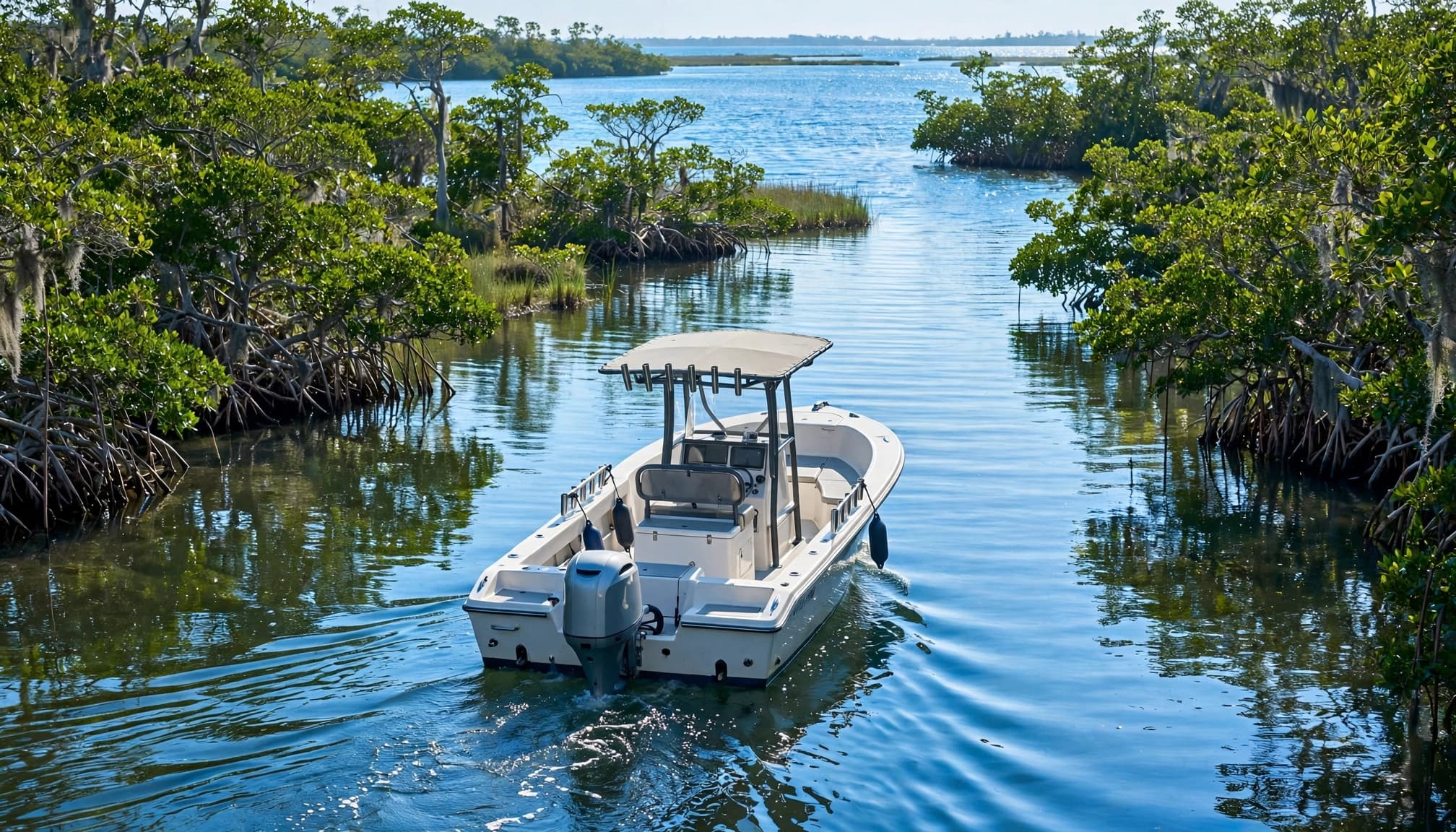
Illustrative center-console boating scene, not our charter boat.
Consider Bays and Inshore Waters
Pine Island Sound and the surrounding coastal waterways include mangrove edges, shallow flats, and other habitat associated with local saltwater fishing. These areas offer a different experience from fishing outside the barrier islands.
Bay waters can provide more shelter than the open Gulf, although wind and weather still influence the ride. If your group values coastal scenery, casting near structure, and a setting inside the islands, those preferences help shape an appropriate plan.
Understand the Nearshore Setting
Our nearshore fishing trips explore coastal Gulf waters off Sanibel and Captiva, outside the protection of the barrier islands. Nearshore fishing does not require making a far-offshore destination the focus of the day.
The actual route depends on weather, sea conditions, and the intended fishing approach. Compare the setting described in each quote rather than assuming that every Gulf trip covers the same distance or involves the same amount of running.
Understand How Fuel Affects Operating Costs
Fuel is part of running a fishing boat, and consumption depends on more than the number of hours booked. Distance traveled, running speed, sea conditions, and the route all influence how much fuel a trip uses.
A day spent working nearby shorelines involves a different pattern of engine use from an outing with longer runs between fishing areas. The location described in a quote therefore helps explain what the trip involves.
That does not mean every change of location creates a separate charge. Fuel is an operating consideration, and a quote should clearly describe the trip covered by the quoted amount.
Departure location matters to the route as well. Our departures and pickups include Cape Coral, Sanibel, and Captiva, so your preferred starting point is useful information when planning the day.
Plan Around Season and Demand
Season affects which fishing opportunities attract visitors, while demand influences the availability of private charter dates. Those are related considerations, but they are not the same thing.
Separate Seasonal Interest From a Guaranteed Catch
Spring and early summer are important periods for the regional tarpon migration, although the timing and fishing opportunities vary. Guests interested in tarpon fishing near Sanibel and Captiva often plan their travel around that seasonal opportunity.
Interest in a particular fish can concentrate bookings within a narrower window. Holiday travel and school breaks can also bring more people to the area, so a preferred date may offer fewer choices without implying a particular seasonal price increase.
Leave Room for Conditions
A calendar provides a starting point, but tides, wind, and water conditions help determine the day's approach. NOAA's tide and current predictions provide information about changing water levels and currents.
If your schedule allows some flexibility, the trip can be discussed around both your travel plans and the fishing outlook. Flexibility does not guarantee better fishing, but it gives the planning conversation more options than a single fixed departure time.
Account for Everyone in Your Group
Group size matters when comparing private charter quotes because the pricing basis and passenger allowance need to match the people coming aboard. A whole-boat quote and a per-person offer describe different arrangements.
If your group includes children or people who will mostly watch, include them in the passenger count. Someone who does not plan to fish still needs room aboard and is part of the outing.
The number of people also affects the experience beyond the total cost. Casting space, room to move, and opportunities for individual instruction all matter when several guests share a boat.
Share the ages, experience levels, and boating comfort of your group when discussing the trip. That information helps us understand whether you want a gentle introduction, time practicing a technique, or an outing centered on a particular fish.
Compare What the Charter Includes
An advertised amount is easier to understand when the essential equipment and services are clearly described. Our fishing trips include a fishing license, gear, bait, and a cooler.
Recognize the Value of Included Equipment
Included rods, tackle, and bait remove the need to travel with your own fishing setup. That can be particularly useful for visitors who want to experience Southwest Florida fishing without assembling equipment for one outing.
Our Southwest Florida fishing guide describes the local fishing options and listed inclusions. When comparing packages, distinguish the equipment supplied for fishing from personal items such as sun protection, suitable clothing, food, and drinks.
Understand License Coverage and Harvest Rules
Under FWC's charter licensing rules, passengers covered by a valid charter license do not need their own recreational saltwater fishing license. That coverage is separate from the rules governing what you may keep.
For example, the Southwest region's snook regulations specify one fish per person per day during open harvest periods, within a 28- to 33-inch total-length slot. Paying for a charter does not guarantee a fish to take home, and catch-and-release fishing can be part of the day.
Compare Quotes Before Booking
A useful comparison puts the same trip details beside each other: duration, fishing setting, passenger count, departure point, and included equipment. Without those details, a lower advertised amount may describe a different outing.
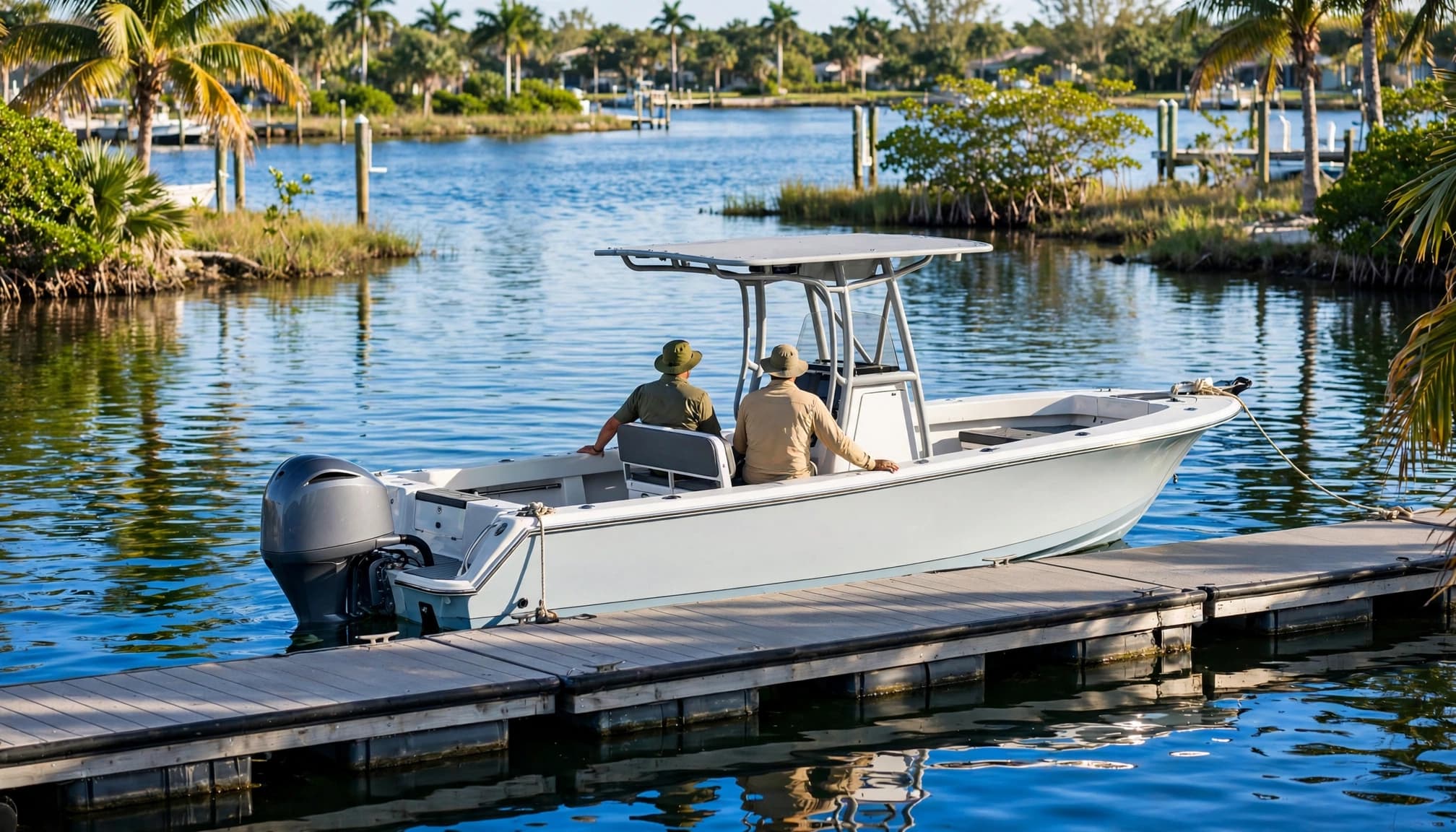
Illustrative small-group boating scene, not our charter boat or guests.
Before booking, useful questions include: "Is this amount for our private group?" and "What departure-to-return duration does it cover?" Those questions establish what is being purchased without assuming that every charter uses the same format.
It is also useful to ask, "What happens if weather prevents the planned trip?" A weather cancellation, a rescheduled outing, and a change to the fishing area are different situations, so the booking terms should distinguish them.
If keeping an eligible fish matters to you, include that preference in the planning conversation. It helps shape expectations without turning the booking into a promise about the catch.
Choose the package that fits your group's priorities rather than paying for time or a setting that someone aboard will struggle to enjoy.
Key Takeaways for Comparing Charter Costs
Trip length establishes the time reserved for your group, while location and running distance help explain the resources involved. Season, demand, and passenger needs also shape the available choices.
The most useful comparison is between equivalent trips with clearly stated inclusions. A suitable charter balances your fishing interests, your group's comfort, and the amount of time you want to spend on the water.
Common Questions About Charter Costs
Does a longer fishing charter guarantee more fish?
A longer trip provides more time for travel, fishing, and adjustments during the outing. Fish activity and conditions still influence the results, so additional time does not guarantee more catches or a particular species.
What is included in our fishing trips?
Our fishing trips include a fishing license, gear, bait, and a cooler. Those inclusions make preparation simpler for visitors, while personal comfort items and any preference for keeping an eligible catch remain part of planning your day.
Plan a Charter That Fits Your Day
The right charter is one whose time, setting, and inclusions suit the people coming aboard. Comparing those details gives you a clearer understanding of the cost without relying on the advertised amount alone.
Contact Go & Get It Charters at (239) 910-4449 to discuss your travel dates, group, and fishing interests. We can talk through an outing around Cape Coral, Sanibel, or Captiva, with room for conditions to shape the plan.
Recent Posts
We got it.
Thank you for contacting us.
We’ll get back to you as soon as possible.