What Fish Can You Catch in Cape Coral During Winter?
Winter brings a different rhythm to the inshore waters around Cape Coral, Sanibel, and Captiva. Cape Coral winter fishing can offer opportunities for sheepshead, redfish, snook, spotted seatrout, and other fish, depending on water temperature, tides, and weather.
You can work mangrove edges, grass flats, docks, and deeper creek holes, often using shrimp or small baitfish. The fish you encounter can change with conditions, so a flexible plan suits winter fishing best.
Cape Coral Winter Fishing: Inshore Fish to Target
Winter fishing in the estuaries can bring several familiar inshore species into reach. Where you fish and what you use will depend on water level, structure, and the day's conditions.
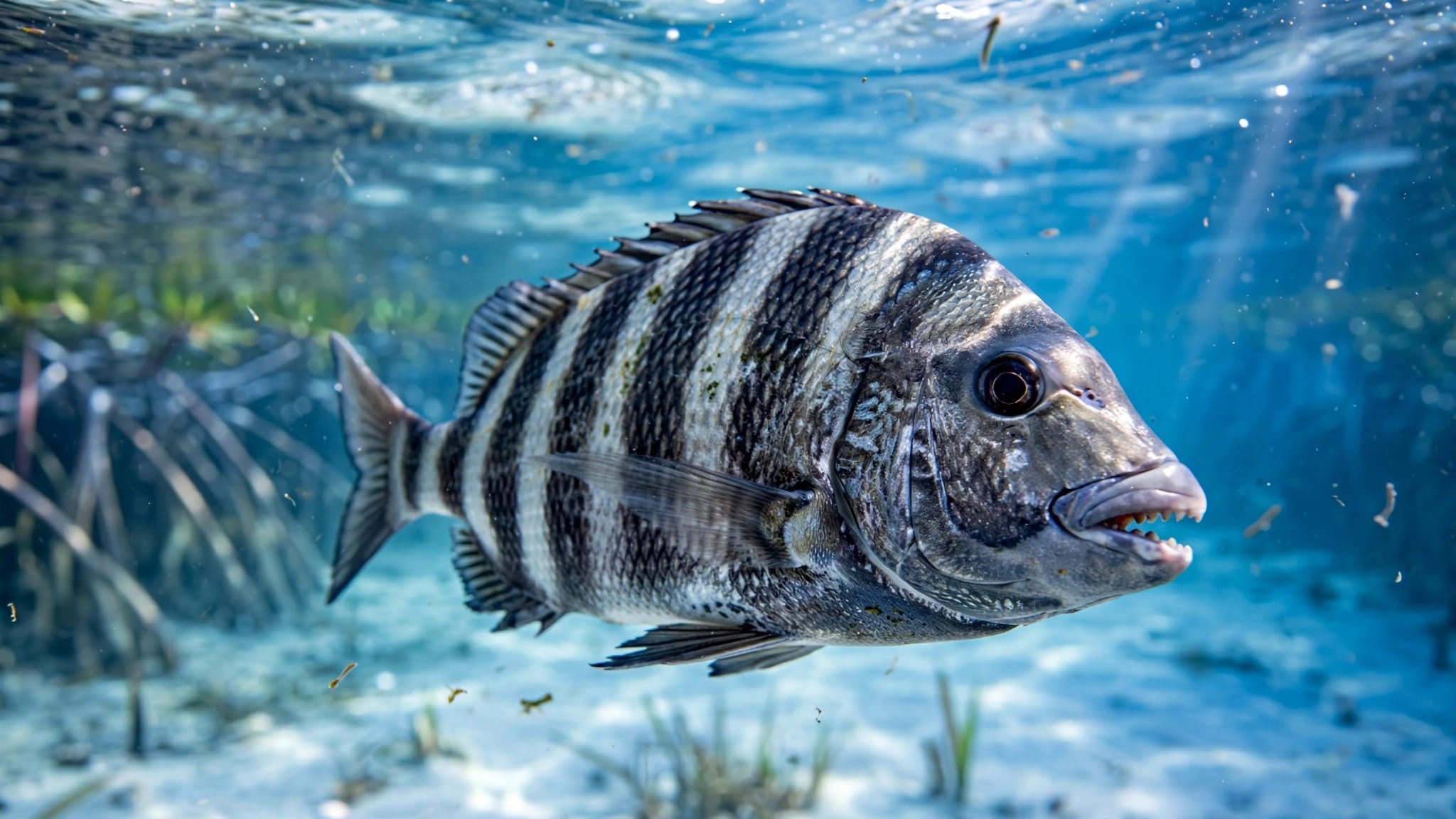
Sheepshead Around Structure
Sheepshead are a common winter target near docks, pilings, seawalls, oyster bars, and mangrove edges. Their habit of feeding close to structure calls for careful casts and attention to a light bite.
Shrimp, cut shrimp, and fiddler crabs are useful baits. These fish can be a good option when you want to spend time around protected inshore structure.
Redfish on Flats and Mangrove Edges
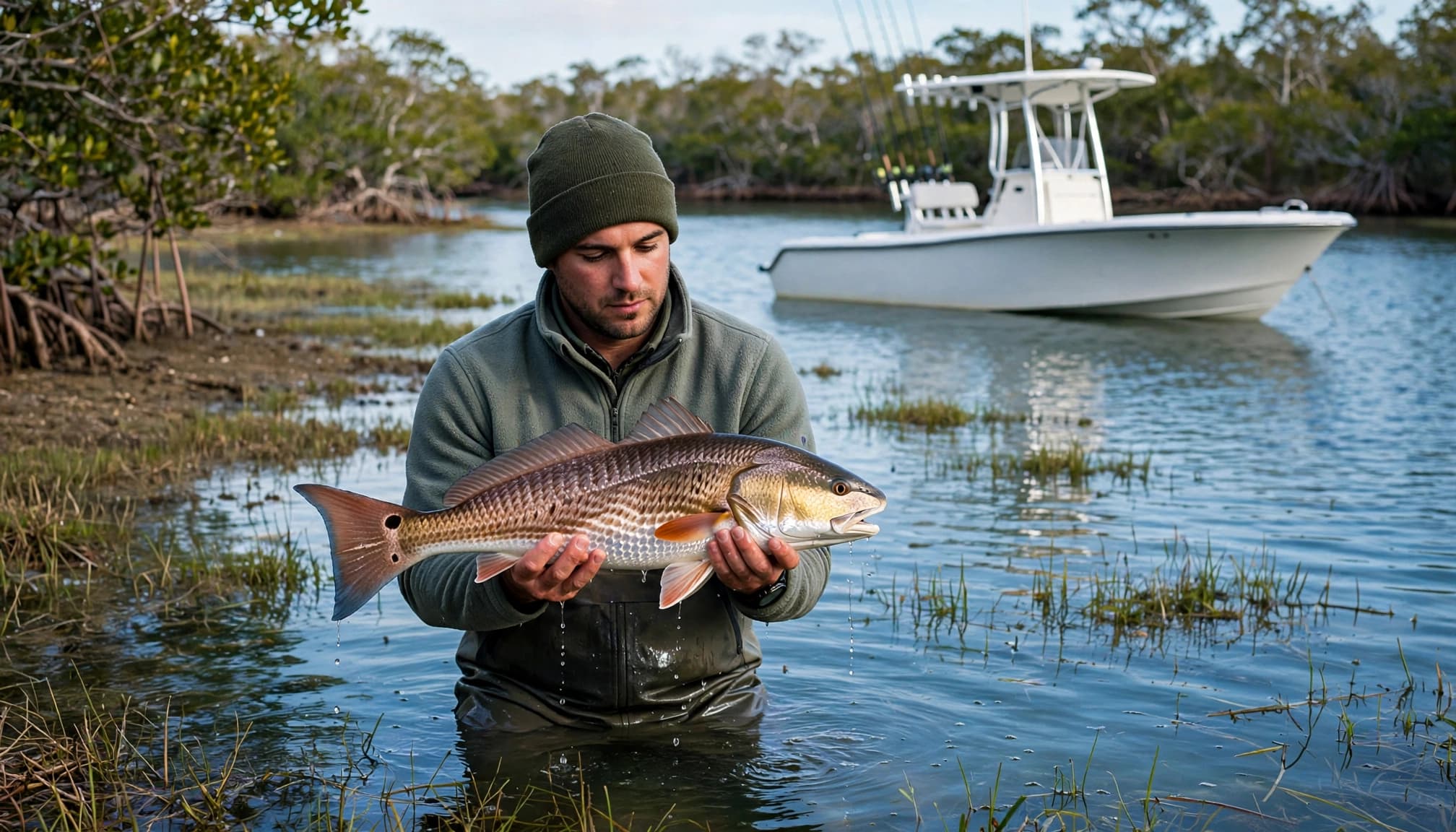
Redfish, also called red drum, use seagrass, oyster areas, and sandy or muddy bottoms. On lower tides, they may hold in deeper creek holes and depressions. As water rises, they can move onto flats and along mangrove shorelines.
Shrimp, cut bait, small baitfish, spoons, and soft plastics can all suit the conditions. Learn more about Cape Coral redfish fishing charters.
Snook in Creeks and Sheltered Water
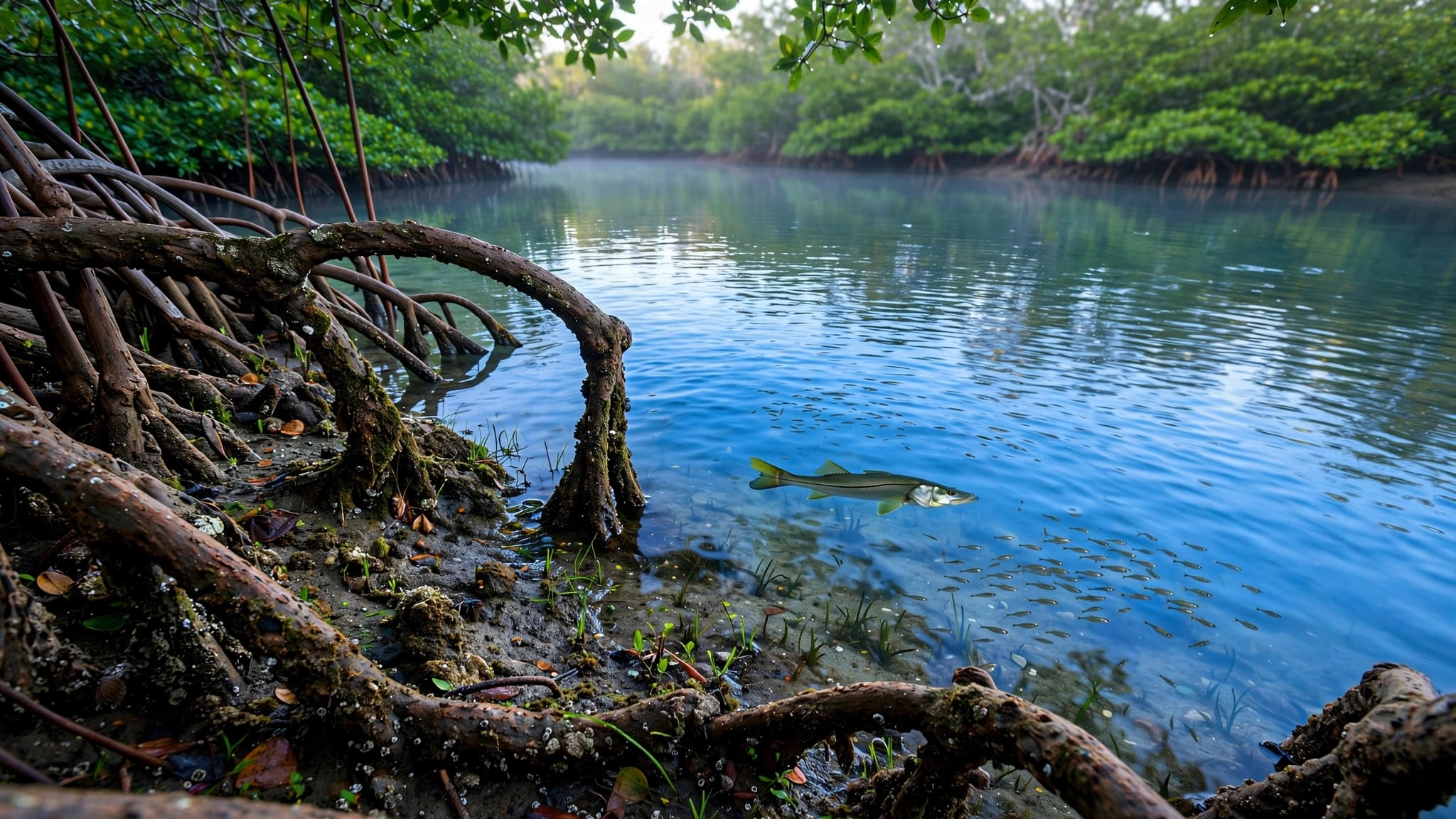
Snook use mangrove shorelines, docks, creek mouths, and other coastal structure. During cold snaps, they may shift toward deeper creeks, sheltered bays, and canals. Moving water can carry bait past those places, so tide movement is worth watching.
Anglers often cast near cover and use live bait or lures suited to the depth and current. Winter snook fishing is catch-and-release in this region. See our Cape Coral snook fishing charters.
Spotted Seatrout on Grass Flats
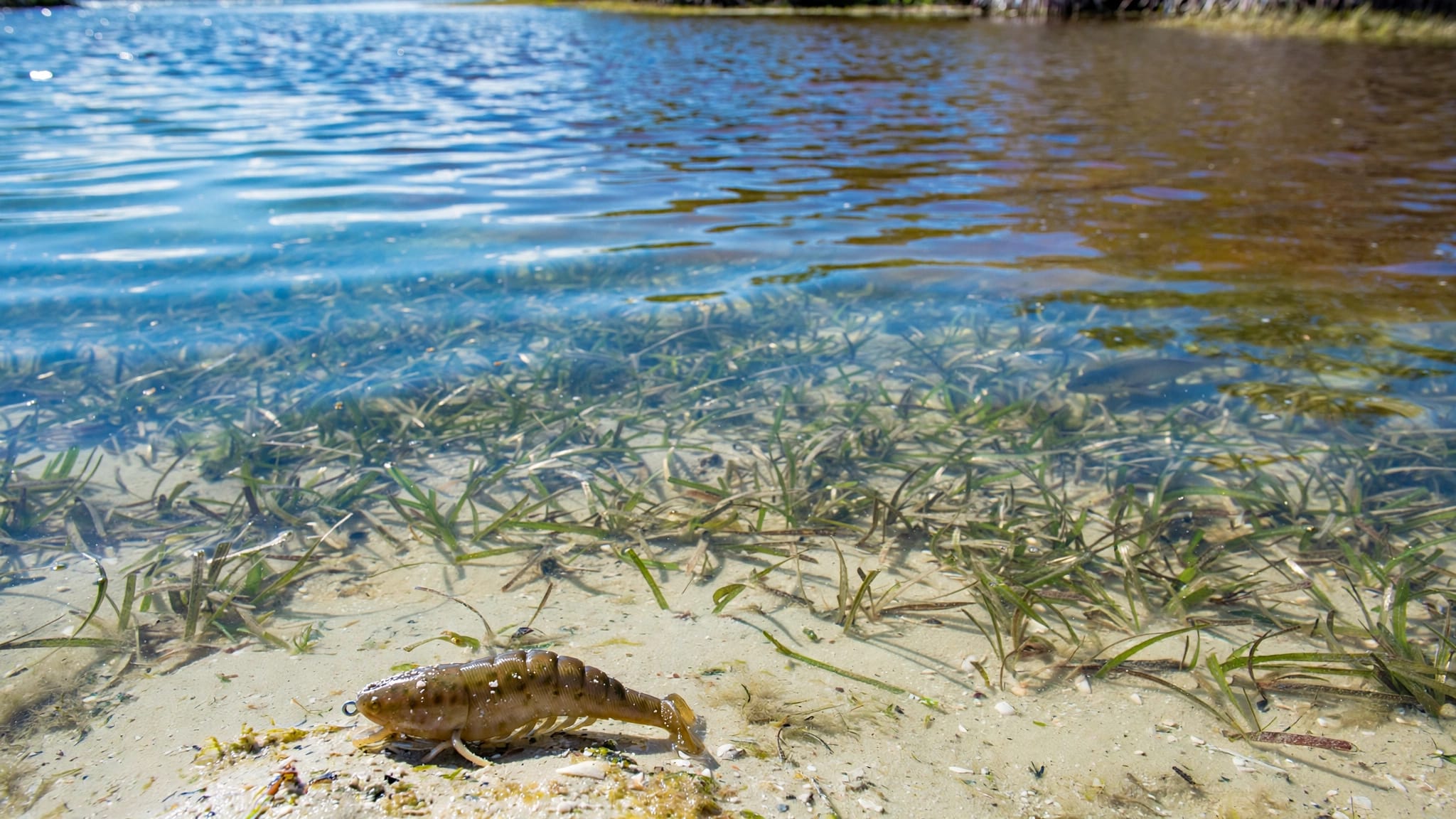
Spotted seatrout, often called speckled trout, are pursued over grass flats and mixed grass-and-sand bottom. Shrimp and small fish are part of their diet, so anglers may fish live shrimp or work soft plastics across a flat.
The right depth and presentation can change with water clarity, wind, and fish activity. The FWC's spotted seatrout regulations provide details for the species.
Mangrove Snapper and Black Drum
Mangrove snapper may be found around docks and Gulf passes, where live shrimp can be effective. Black drum are another possible catch near deep holes, bridge pilings, rock structure, and channel edges. Shrimp is a practical bait for both species.
These fish add variety to a winter trip, though their locations can shift with conditions and water movement.
Find Fish by Reading Winter Water
The same shoreline or flat can fish differently as the tide changes. A good approach is to adjust your location and presentation to the water in front of you.
Work Deeper Water at Low Tide
When the tide drops, fish may gather in creek channels, potholes, and deeper depressions that retain water. These areas give you a clear place to focus casts, especially when nearby flats are shallow.
A falling tide can also move bait out of mangroves and over edges. Watch for current and bait activity, then fish the channel or drop-off where those movements meet.
Follow the Water Back onto Flats
As the tide rises, fish can move closer to mangroves, oyster bars, and seagrass. Shrimp is a useful all-around bait for these winter targets, while soft plastics, spoons, or small baitfish can fit a more active search.
A Cape Coral inshore fishing charter can cover different shorelines, flats, and tidal waterways as the day's conditions allow. The area fished depends on weather and your group's interests.
Winter Harvest Rules for Local Species
Winter can affect not only where fish are found, but also whether they may be kept. Florida Fish and Wildlife Conservation Commission rules set size, season, and bag limits by species and region.
Redfish and Snook Have Winter Closures
In the Charlotte Harbor region, red drum harvest is closed from December through February. During open seasons, the slot is 18 to 27 inches, with one fish per person per day and a two-fish vessel limit. The FWC red drum regulations list the seasonal rules.
Snook harvest is also closed from December 1 through the end of February in this region. The slot is 28 to 33 inches, with a one-fish-per-person daily limit when harvest is open. See the FWC snook regulations.
Sheepshead Size and Bag Limits
Sheepshead have a 12-inch minimum size and an eight-fish daily bag limit per person. The 50-fish vessel limit applies in March and April, not during winter. The FWC sheepshead regulations provide the species rules.
Plan a Winter Fishing Charter Around Your Priorities
A private fishing charter lets your group focus on a species or adapt as the conditions develop. If sheepshead around structure are your preference, the plan may differ from a day searching grass flats for trout or redfish.
At Go & Get It Charters, our trips include a fishing license, gear, bait, and a cooler. Tell us what you hope to catch and where you are staying, then plan around the day's conditions.
Key Takeaways
- Sheepshead, redfish, snook, spotted seatrout, mangrove snapper, and black drum are possible winter targets.
- Low water can concentrate fish in deeper holes, while a rising tide can open mangrove edges and flats.
- Shrimp works for several species, but location and presentation should match the fish and conditions.
Winter Fishing Questions
Can you catch snook in Cape Coral during winter?
Yes. Snook can be targeted, but winter harvest is closed in the Charlotte Harbor region, so the fishery is catch-and-release.
What bait is useful for winter fishing?
Shrimp is a versatile choice for sheepshead, trout, snapper, and drum. Small baitfish and artificial lures can also fit redfish and trout fishing.
Plan for a Day on the Water
Winter fishing around Cape Coral gives you several inshore targets and habitats to explore. A flexible plan, built around tides and conditions, leaves room to adjust as the day develops.
If you are planning a private trip, share your dates and the fish you would most like to pursue. We can talk through an approach for your time on the water.
Recent Posts


We got it.
Thank you for contacting us.
We’ll get back to you as soon as possible.