
How to Find Snook Along Cape Coral Mangroves
Snook fishing in Cape Coral starts with finding a mangrove shoreline where cover, moving water, and signs of bait come together. A bend, a gap in the roots, or a change in the current can give you a useful place to begin.
You don't need years of experience to enjoy this kind of fishing. Whether you're learning to cast or returning to a favorite pursuit, watching the shoreline can help you understand where to focus your next presentation.
Start With the Shoreline's Shape
A mangrove shoreline can look like one continuous wall of green until you spend time looking at its edges. The roots, openings, and changes in the bank create different places for fish to use.
Look for Changes in the Bank
Begin by noticing where the shoreline turns, a small creek enters, or a line of mangroves gives way to an opening. These features can affect how water and bait move along the edge.
A point that extends into the water may receive current differently than the shoreline beside it. A pocket just around the bend may offer a fish a place to hold near cover.
Pay Attention to Mangrove Roots
Mangrove roots provide shelter for small fish and other prey, as well as cover for larger fish. The Florida Fish and Wildlife Conservation Commission describes mangroves as important coastal habitat for marine life.
For an angler, a visible opening beside the roots is a useful target. You can place a presentation near cover while leaving enough open water to work it back toward the boat.
Use the Tide to Understand the Shoreline
The tide changes both the water level around the mangroves and the way water moves through connected creeks and bays. A shoreline that looks promising at one stage may offer a different presentation later in the day.
Rising and Falling Water
As water rises, it can reach farther into the mangrove edge and cover areas that were exposed earlier. On a falling tide, water drains away from the roots and through openings in the shoreline.
Neither direction guarantees a bite. Each gives you a reason to look at where water is entering or leaving an area and how that movement relates to nearby cover.
Tidal Timing and Actual Flow
NOAA tide predictions provide predicted times and heights for tide stations. They are a useful starting point for understanding the day's water levels.
The water at your fishing spot may not follow the same timing as a nearby station. Wind, the shape of a creek, and its distance from open water can also affect what you see.
Watch the water itself when you arrive. Floating leaves, small ripples, and movement around roots can show which way the current is running.
Find Where Moving Water Meets Cover
Snook often feed around moving water, where prey can be carried toward a fish waiting near structure. Along Cape Coral mangroves, the connection between current and cover is often more useful than either feature on its own.
Look for a place where water moves past a point, funnels through a shoreline opening, or changes speed near a tangle of roots. A visible line between faster and slower water can give you a place to begin.
If the current is strong, fish may have access to areas sheltered by the shoreline. If movement is subtle, watch for smaller signs, such as debris drifting past one section of roots while another area remains calm.
Give the water time to reveal its direction before making a series of casts. That pause can help you decide which part of the shoreline deserves attention first.
Watch Shade and Bait Activity
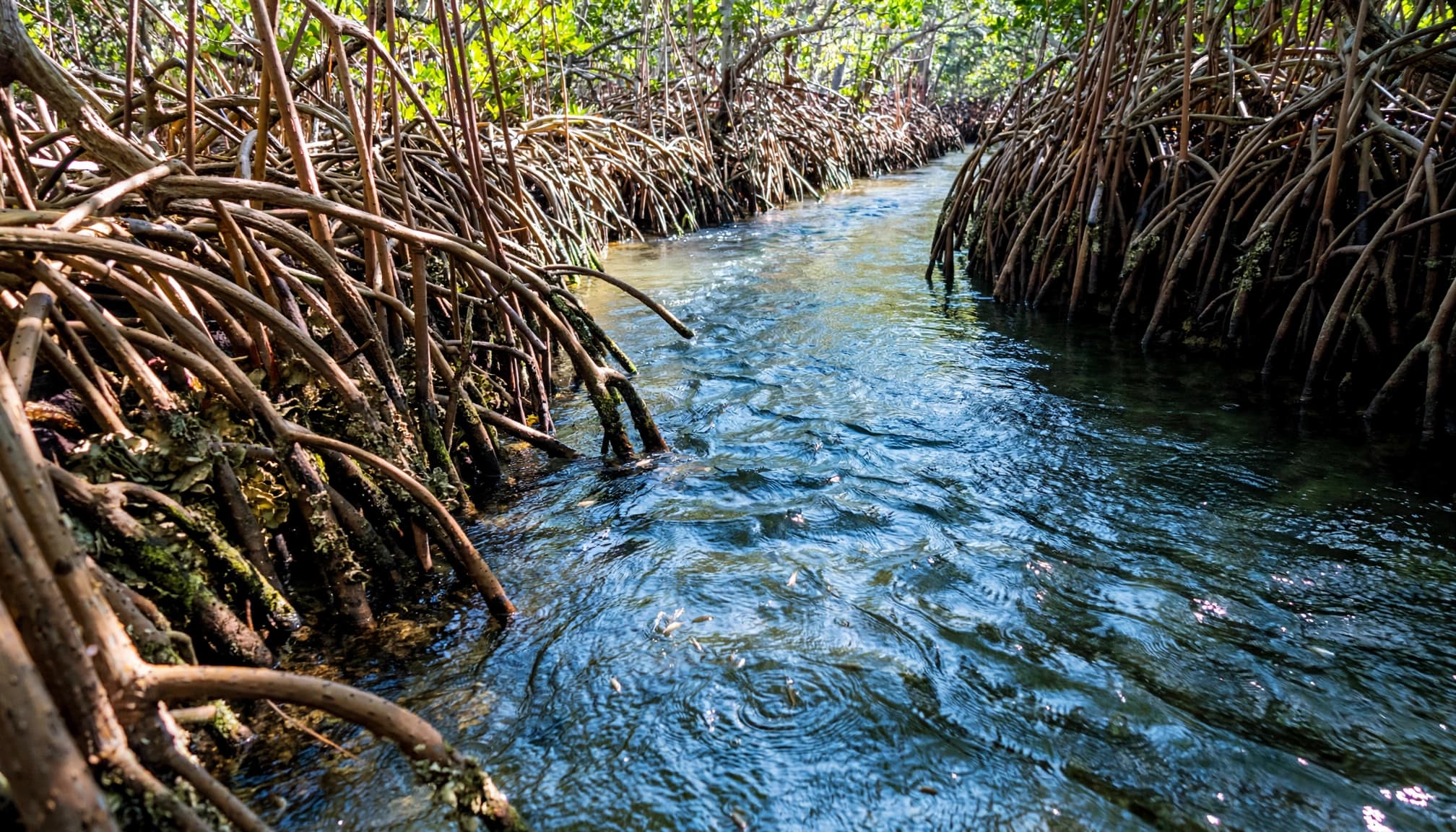
Shade and bait activity add context to the shoreline. They don't prove a snook is present, but they can help you choose between several stretches that otherwise look similar.
Follow the Shade Line
Mangrove branches cast shade over portions of the water beside the bank. The boundary between shade and sunlight is an easy feature to see and can be a useful place to present a bait.
Look at how that boundary meets roots, an opening, or moving water. A shaded pocket with a clear path to nearby current offers several features to consider in one small area.
Notice What the Bait Is Doing
Small fish near the surface may make ripples, scatter, or move along the bank. Watch their direction and whether they remain near a particular point or opening.
A sudden disturbance can be exciting, although it won't always be caused by a snook. Treat bait activity as one part of the picture, then consider the current and cover before choosing your next cast.
Approach the Mangroves With Care
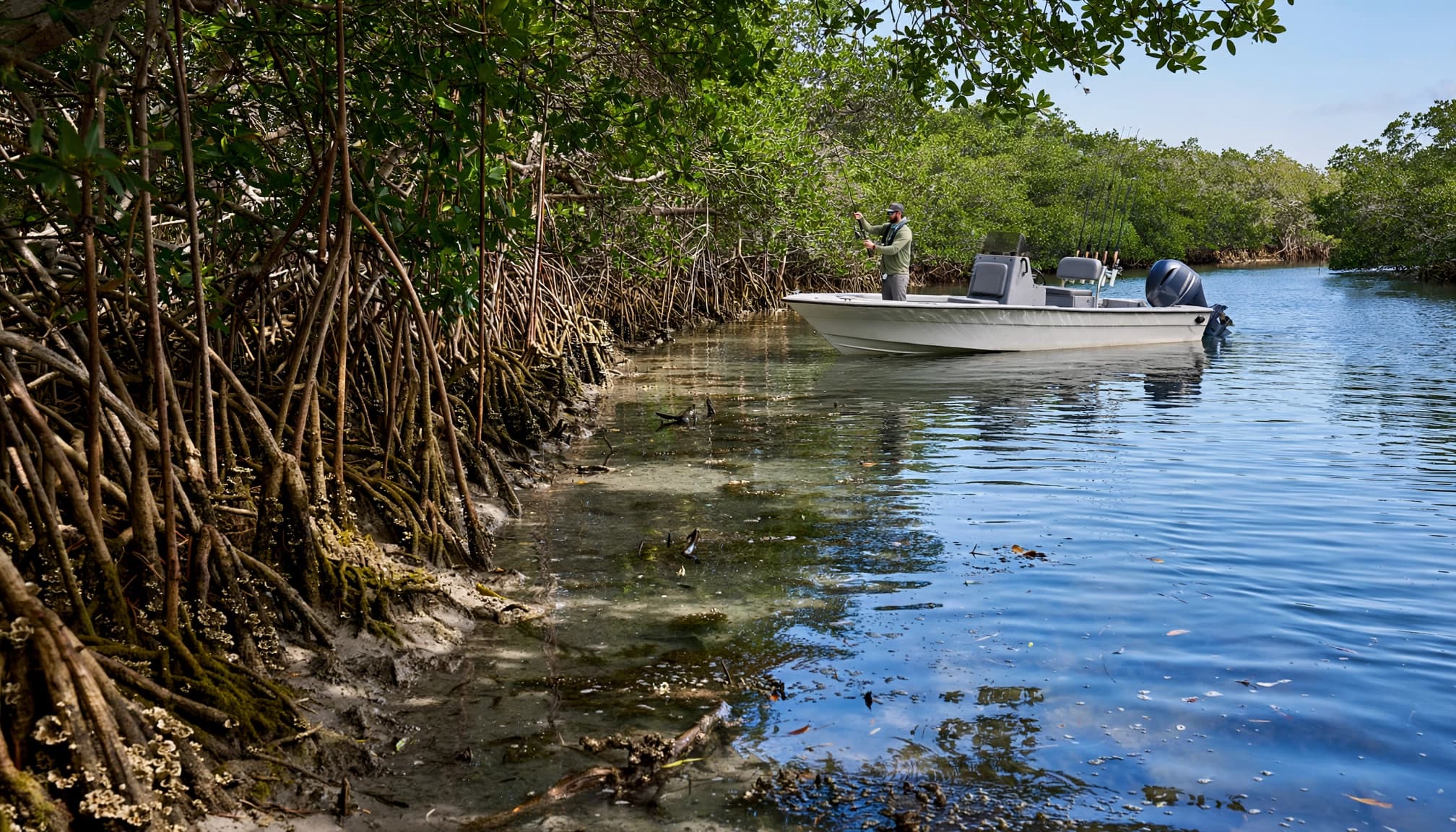
A careful approach gives you time to observe the shoreline before the boat reaches the area you want to fish. It also leaves room to cast without crowding the roots.
Reduce speed as you near the bank and avoid unnecessary noise aboard. Closing a hatch gently, setting gear down carefully, and keeping movement controlled are simple habits that help maintain a calm approach.
Wind and current can move the boat even when the engine is no longer driving it forward. Notice where the boat is heading and allow enough room to make adjustments before it reaches the mangroves.
On our inshore fishing charters, the fishing area depends on the day's conditions and the group's interests. A sheltered shoreline can make an appealing setting, although wind and weather still influence the experience.
Make Each Cast With a Purpose
A useful cast begins with a small target, rather than the entire shoreline. Choose an opening, a shaded edge, or a stretch of water beside the roots, then give your presentation time to move through it.
Start Near Accessible Cover
An opening beside the mangroves gives you a clear place to begin. Aim for the water next to the cover rather than the branches themselves, especially if you're learning to cast.
A controlled presentation helps you spend more time fishing and less time retrieving tackle from the trees. As your accuracy improves, you can work closer to the features you want to explore.
Work Through the Target Area
After the cast lands, pay attention to how the water moves your bait or lure. Allow it to pass through the area you've chosen, while maintaining enough control to respond if a fish takes it.
If a cast doesn't produce a bite, try another part of the same feature before moving on. A small change in placement can put the presentation closer to the water you intended to cover.
Choose a Presentation for the Conditions
Both natural bait and artificial lures can be used when pursuing snook. The choice depends on the water, the available bait, and how you want to fish the shoreline.
A natural bait presentation lets you pay attention to how the water carries it near cover. An artificial lure gives you the chance to make repeated casts and control its movement as you retrieve it.
In either case, the goal is to keep the presentation in a promising area long enough for a fish to encounter it. If wind or current moves it away too quickly, adjust your position or choose another section of bank.
On a private trip, tell your captain whether you're interested in practicing with artificial lures or learning about natural bait. The approach can reflect your interests as well as the conditions on the water.
Adjust When the Shoreline Changes
The first promising stretch may not produce a bite, and conditions can change while you're fishing. A useful adjustment starts with noticing what is different, rather than changing everything at once.
If the water has stopped moving, you might spend time at another opening or revisit a nearby point as the tide changes. If the wind makes your presentation difficult to control, a more sheltered bank may give you a better chance to place it where you intend.
Bait activity can also help guide the next move. If small fish have shifted along the shoreline, watching where they go may reveal another area worth exploring.
Cape Coral's connected waterways offer more than one setting for an inshore trip. Our guide to local fishing opportunities describes other species and habitats you may encounter during a day in Southwest Florida.
Plan for the Fish You Catch
A snook can make a strong run after a strike, particularly when it is close to mangrove roots. Stay attentive to your line and follow your captain's direction while bringing the fish toward the boat.
If the fish will be released, handle it with care and keep the time out of the water brief. Fish welfare matters more than a photograph, and your captain can help with the release.
Harvest rules depend on the management region and include limits on season, size, and the number of fish kept. The FWC snook regulations describe Florida's regional requirements.
If bringing home an eligible catch matters to your group, mention it when planning your trip. That gives us an opportunity to discuss what the outing may include.
Snook Fishing Questions
Can beginners fish for snook around mangroves?
Yes. Beginners can learn to recognize shoreline features, practice controlled casts, and follow a captain's guidance when a fish takes the bait. A catch is never guaranteed, but the experience offers plenty to observe.
Does the tide have to be moving to catch snook?
Moving water can help carry prey past fish near cover, making it a useful condition to look for. Snook can still be present when the current is slow, so consider shade, structure, and bait activity as well.
Plan Your Cape Coral Snook Trip
The details along a mangrove shoreline can make snook fishing in Cape Coral rewarding to explore. Look for cover, notice how the water moves, and give each cast a purpose.
If snook are on your wish list, tell us about your group and your preferred dates. Go & Get It Charters offers private trips around Cape Coral, Sanibel, and Captiva, with gear, bait, and the fishing license included.
Recent Posts
We got it.
Thank you for contacting us.
We’ll get back to you as soon as possible.