What Water Clarity Tells You About Fishing Captiva
Water clarity around Captiva helps you judge how easily fish may see a bait, where they might find cover, and how to present a lure. It is one clue, alongside moving water, depth, and signs of bait.
Clear water can make fish easier to spot, while stained water may call for a different approach. For anglers of any experience level, learning to read those changes can add to the day on the water.
Read Clear, Stained, and Muddy Water
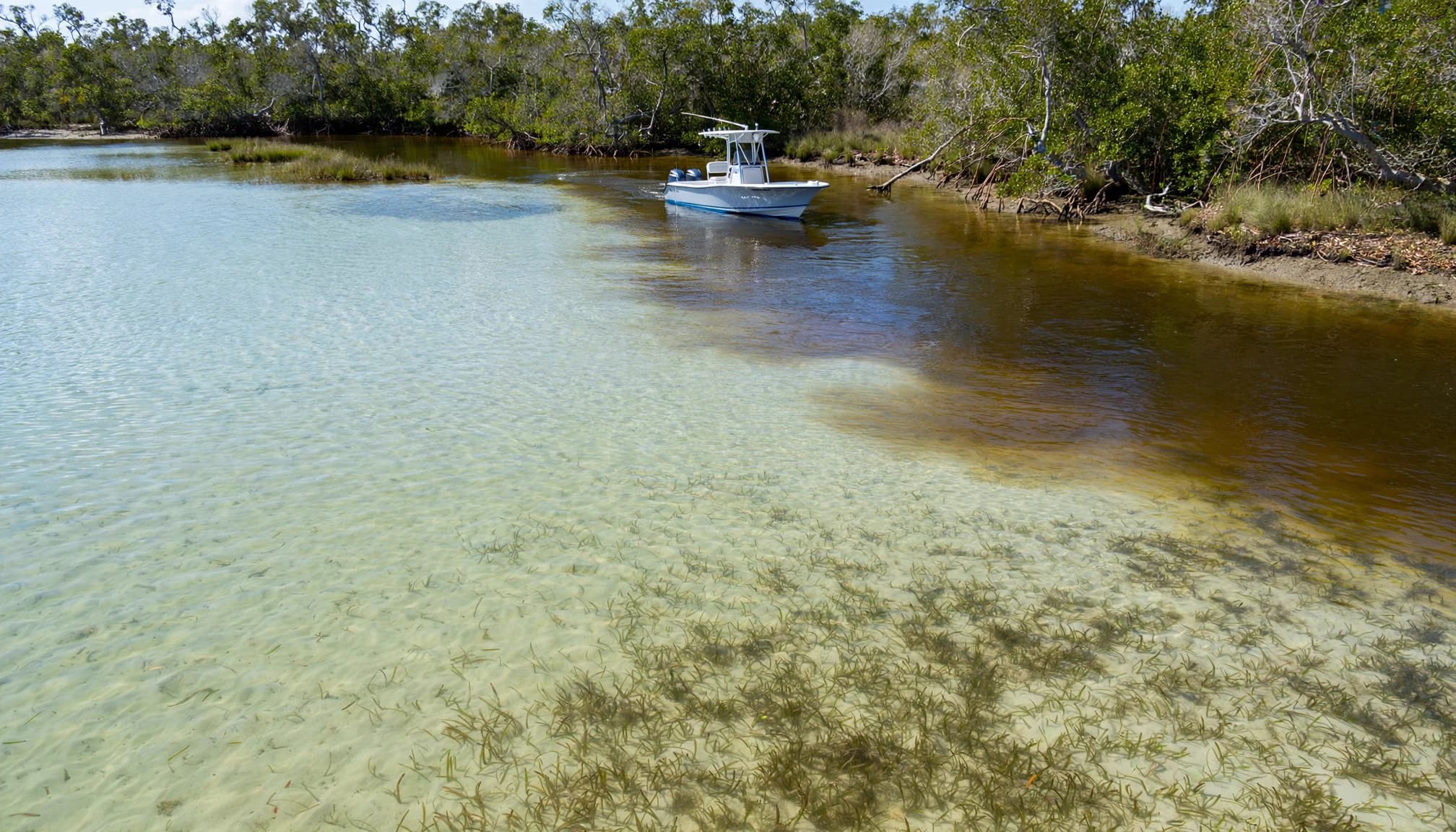
Clarity describes how far you can see into the water. Color is related, but a brown tint does not always mean sediment is floating through it.
Clear Water
On a clear flat, you may be able to see sandy patches, seagrass, and approaching fish. Fish may also see the boat, line, or an unnatural presentation more easily in shallow water.
Give the area some room and make a longer cast when possible. A natural-colored soft plastic or bait presented near the edge of a sandy opening can be a useful starting point. Move the lure at a pace that looks like prey rather than rushing it across the flat.
Stained Water
Stained water has some color, but you can still see into it. Around mangrove shorelines and creek mouths, that tint may give fish cover while leaving enough visibility for them to find food.
Try a lure with contrast, such as a darker soft plastic or one with a brighter tail. Cast near a shoreline point or other cover, then vary the retrieve until you find a pace that draws attention. A moving tide may carry bait past fish waiting near those edges.
Muddy Water
Muddy water contains enough suspended material to make seeing below the surface difficult. Fish may need a bait to pass closer before they notice it, especially when little light reaches the water.
A dark lure can provide a clearer outline, while a lure that vibrates or rattles adds another cue. Live shrimp or other natural bait may also be worth trying. Work an area slowly and make repeated casts near cover rather than assuming one pass tells the whole story.
Follow the Tide, Wind, and Rain
Clarity can change during a trip as water moves through Captiva's passes, bays, and shorelines. The direction of that change depends on where the water is coming from and what it carries.
Watch Moving Water and Wind
An incoming tide may bring clearer Gulf water through a pass, while an outgoing tide can carry more stained water out of the back bays. Neither pattern is guaranteed, so look at the water in front of you.
Wind and waves can stir sediment over shallow bottoms and make an exposed shoreline harder to fish. A more sheltered side of an island or a protected section of Pine Island Sound may offer a more comfortable place to look for bait and make casts.
Consider Rain and Freshwater Runoff
Heavy rain can wash sediment and freshwater into coastal waterways, changing color and visibility. The Sanibel-Captiva Conservation Foundation notes that freshwater from the Caloosahatchee strongly influences Southwest Florida water quality.
Some color also comes from dissolved organic material rather than loose mud. The foundation monitors colored dissolved organic matter, one factor that affects how local water looks. A tea-colored stretch may therefore fish differently from water clouded by stirred-up sediment.
Account for Light and Depth
Clarity works together with sunlight and water depth. A lure that is easy to see near the surface may be less visible deeper down, particularly in stained water or under cloud cover.
Bright conditions can help you see fish on a shallow flat, but those fish may be more aware of the boat. A quieter approach and a cast beyond the fish can help you bring the bait into view without placing it directly on top of them.
In lower light, fish may have a shorter view of your offering. Try a darker silhouette, a lure with vibration, or a slower presentation that gives the fish more time to find it. Depth and light matter even when the water color appears unchanged.
Choose a Location That Matches the Conditions
In Pine Island Sound, mangrove edges, grass flats, and sandy areas offer different places to look. Snook may use shoreline cover, while spotted seatrout are associated with grass and sandy bottoms. Redfish also use shallow habitat, including oyster areas.
If a flat is too cloudy to see much, try fishing a recognizable edge where current moves past cover. Our redfish fishing trips explore the kinds of coastal and estuary habitats where those fish may be found.
Outside the islands, Gulf beaches and nearby waters offer another option when wind and waves allow. On a nearshore fishing trip, bait activity and sea conditions matter alongside visibility. The clearest-looking water is not always the most useful place to start.
Water Clarity Questions
Can you catch fish in muddy water?
Yes. Fish can still feed in low visibility, although a slower presentation, natural bait, or a lure with vibration may help them find your offering.
Does clear water mean the fishing will be better?
Clear water can make fish easier to see, but it can also make a boat and tackle more noticeable. Tide, habitat, bait, and light all influence the fishing.
Plan a Day Around the Conditions
Water clarity gives you a starting point for choosing a location and presentation. The most useful approach is to watch how it changes and adjust to the water in front of you.
To discuss a private fishing charter around Captiva, call Go & Get It Charters at (239) 910-4449. Our inshore fishing trips offer time to explore the flats and shorelines as conditions allow.
Recent Posts


We got it.
Thank you for contacting us.
We’ll get back to you as soon as possible.