
What to Pack for a Southwest Florida Fishing Charter
A fishing charter packing list starts with sun protection, non-slip shoes, water, snacks, and the personal items you need for a day outdoors. Our fishing trips take you into the coastal waters around Cape Coral, Sanibel, and Captiva, where conditions can change during the outing.
Whether you are planning your first charter or returning to Southwest Florida waters, a small amount of preparation can make the experience more comfortable. Start with the essentials, then adjust what you bring for your group and the length of your trip.
Use This Fishing Charter Packing List
A compact bag is easier to carry aboard and keep out of the way while everyone moves around the boat. For a typical day on the water, pack these items:
- Bring broad-spectrum sunscreen, a brimmed hat, and sunglasses.
- Wear a lightweight long-sleeve shirt and comfortable fishing clothes.
- Choose closed-toe shoes with non-marking, non-slip soles.
- Add a light rain jacket or an extra layer if conditions call for one.
- Pack drinking water and snacks for the time you expect to be out.
- Bring any necessary medication and a suitable motion-sickness remedy.
- Protect your phone, keys, and other valuables in a waterproof pouch or dry bag.
- Include a small towel and any personal items your group may need.
If children are joining you, consider their clothing, food preferences, and comfort on the boat as you pack. The goal is to have what everyone needs without filling the deck with loose belongings.
Protect Yourself From the Southwest Florida Sun
Time on the water means exposure to sunlight overhead and reflected light around the boat. The EPA's sun safety guidance notes that water can reflect damaging rays, increasing the chance of sunburn.
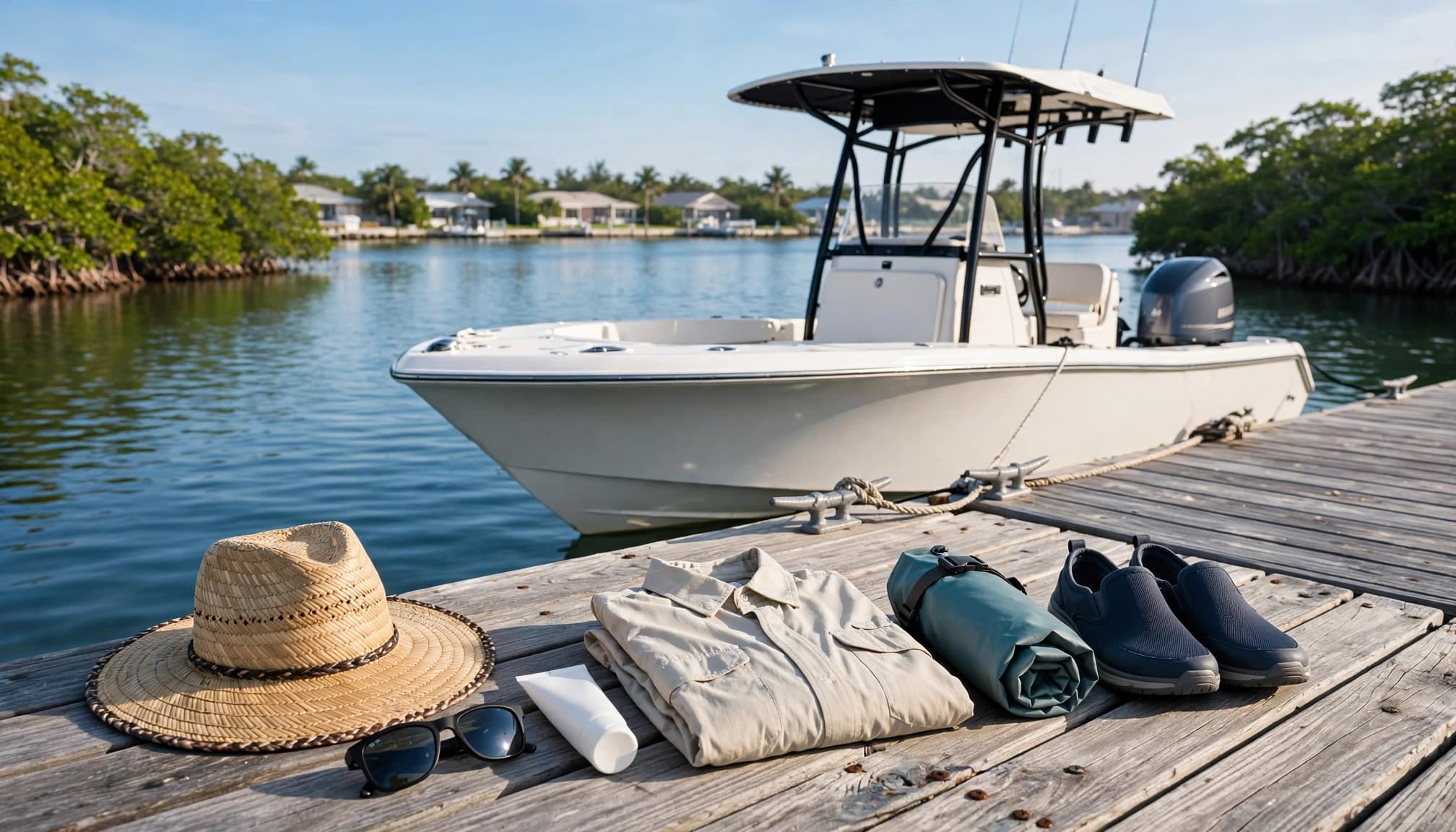
Bring Sunscreen and a Hat
Choose a broad-spectrum sunscreen and apply it before you leave the dock. Bring it along so you can reapply during the trip, following the directions on the container.
Pay attention to areas that are easy to miss, including your ears, neck, and the tops of your hands. A broad-brimmed hat can add coverage for your face and neck, while a chin strap helps keep it secure when the boat is moving.
Choose Sunglasses and Lightweight Coverage
Polarized sunglasses can reduce glare on the water and make it easier to watch your line or look toward the shoreline. A retaining strap is useful if you lean over to see a fish or move around the boat.
A lightweight, long-sleeve shirt gives you another layer of sun protection without relying on sunscreen alone. If you prefer shorts, consider how long your legs will be exposed, and pack sunscreen accordingly.
Dress for Changing Conditions
A pleasant departure does not mean the temperature, wind, and cloud cover will stay the same throughout your trip. Clothing that works in layers lets you adjust without carrying a bulky bag.
Start With Comfortable Fishing Clothes
Choose lightweight clothing that lets you cast, sit, and move around the boat comfortably. A breathable shirt and quick-drying shorts or pants are practical choices if you encounter spray or handle a wet line.
If you prefer extra coverage, lightweight pants can protect your legs while still feeling comfortable in warm weather. Keep a dry layer in your bag if you tend to feel cold after getting wet.
Add a Rain Jacket or Warm Layer
A light rain jacket can help with passing showers and wind-driven spray. On a cooler morning, a thin jacket or long-sleeve layer may be welcome during the ride, even if the afternoon becomes warm.
Wind can make an open stretch of water feel different from a sheltered shoreline. The National Weather Service's marine safety guidance explains why marine forecasts and warnings matter to boaters.
Wear Shoes That Stay Secure on Deck
Closed-toe shoes with non-marking, non-slip soles are a good choice for a fishing charter. They give your feet coverage and can help you keep your footing when the deck is wet.
Shoes that stay on your feet are more useful than loose flip-flops when you step aboard, change positions, or move toward a rod. Avoid heavy shoes that are uncomfortable when wet, and leave room for your toes if you expect to stand for much of the trip.
You may also want a dry pair of shoes for the ride home. Leave that pair ashore so your boat shoes can get wet without affecting the rest of your day.
Bring Water and Food for Your Trip
Spending several hours outdoors can leave you thirsty even when the breeze feels comfortable. Bring drinking water for each person and make a habit of drinking throughout the outing.
Snacks that are easy to handle on a moving boat can make the day more comfortable. Crackers, fruit, sandwiches, or other familiar foods are practical choices, especially for children or anyone who prefers to eat at regular times.
Think about the length of your charter when deciding how much to bring. A four-hour outing calls for a different food plan than an eight-hour day, and guests with dietary needs may want to pack their own preferred items.
Keep food in closed containers or bags, and collect wrappers as you go. That makes it easier to keep personal belongings together and prevents lightweight packaging from blowing into the water.
Plan for Medication and Motion Sickness
A comfortable day starts with the personal care items you use away from home. Pack them where you can reach them without opening every bag on the boat.
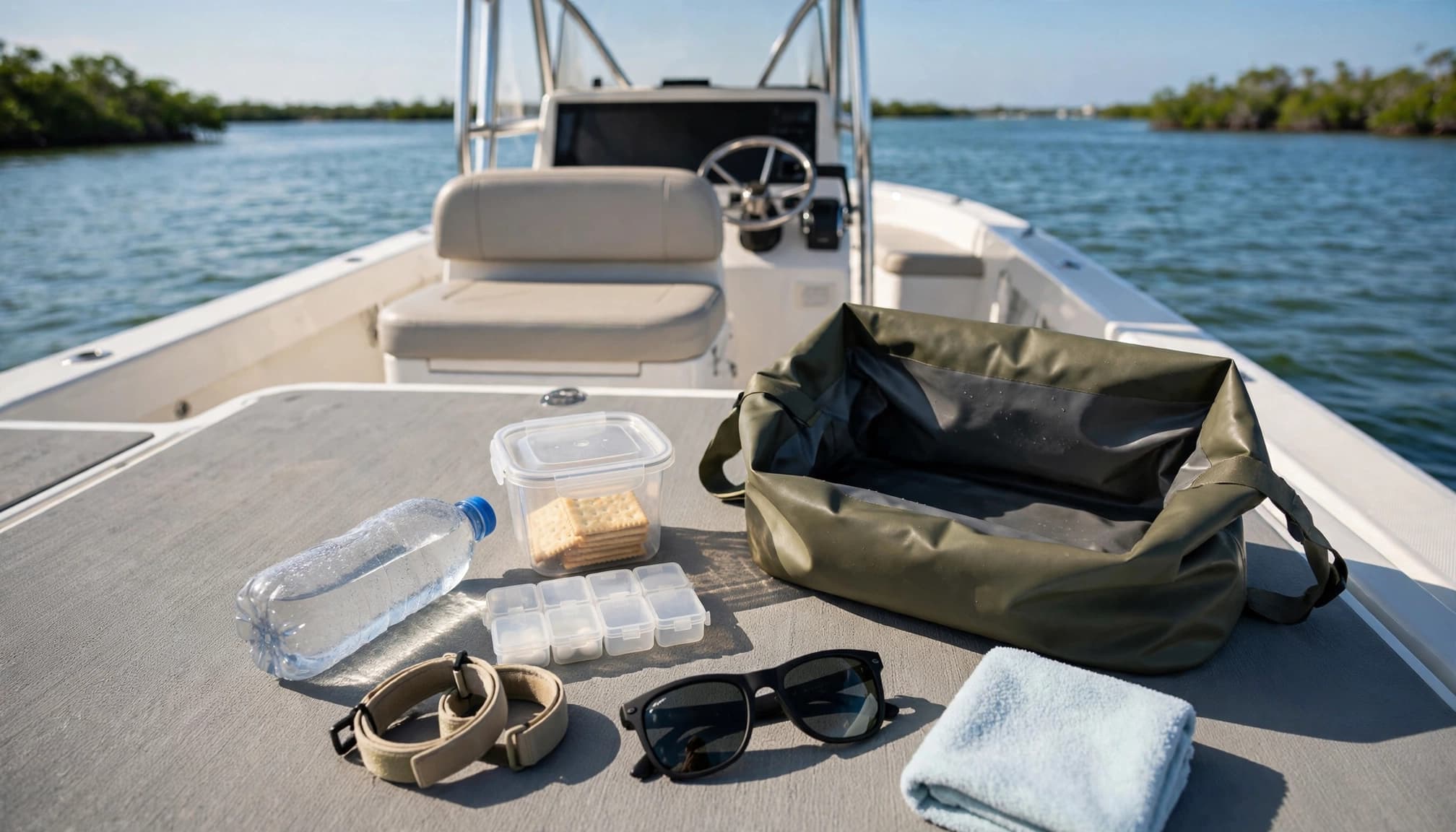
Pack Your Usual Medication
Bring any medication you may need during the trip, along with items used for an ongoing health condition. A waterproof pouch can help protect supplies from spray, while original packaging keeps medication information close at hand.
Consider the time you will spend traveling to and from the departure point as well as your time aboard. If someone in your group has a medical need that could affect the outing, let us know during planning.
Prepare for Motion Sickness
If you are prone to motion sickness, talk with a healthcare professional about an appropriate remedy before your trip. Some options need to be taken before symptoms begin, and suitability can depend on your health and other medications.
The CDC's motion sickness guidance notes that drowsiness is a common side effect of medication used for it. Looking toward the horizon and avoiding extended time on a phone may also help some guests feel more comfortable.
If you begin to feel unwell, let the captain know. Your comfort matters, and sharing how you feel gives us a chance to consider the day's conditions and your group's needs.
Keep Phones and Valuables Dry
A phone can be useful for photographs, but it may encounter spray, wet hands, and a moving deck. Place it in a waterproof pouch when you are not using it, and consider a wrist strap if you plan to take pictures.
Keep keys, identification, and any payment items together in a small dry bag. A zippered bag inside your main bag can also make smaller belongings easier to find when it is time to leave.
Bring a small towel for drying your hands or wiping off personal items. Pack only the valuables you expect to need, and leave extra electronics and jewelry somewhere secure ashore.
Consider Your Group and Trip Length
A four-hour trip can suit guests who want an introduction to fishing while leaving time for other plans. Six-hour and eight-hour trips offer more time on the water, so food, water, sun protection, and personal comfort need a little more thought.
Children may appreciate familiar snacks, a comfortable hat, and a change of clothes for the ride home. If a child needs medication or has a particular sensitivity to heat, include those needs in your family's plan.
The type of water can shape the experience too. Nearshore fishing near Cape Coral takes place outside the barrier islands, where wind and waves can influence the ride.
Share your group's ages, experience, and comfort on a boat when planning your trip. Captain Andre can take those preferences into account as conditions and fishing opportunities shape the day.
Fishing Charter Packing Questions
Should I bring a change of clothes?
A change is optional, but it can be useful if you get wet or have plans after the charter. Leave a dry shirt, shorts, or shoes in your vehicle so they are ready when you return.
What should I bring for a child?
Pack sun protection, secure shoes, water, familiar snacks, and any necessary medication. A towel and dry clothes can also make the trip home more comfortable.
Get Ready for Your Day on the Water
The most useful things to pack are the items that help you stay comfortable outdoors: sun protection , secure footwear, water, food, and any personal medication. Keep everything together in a compact bag that is easy to carry aboard.
If you are planning a trip near Cape Coral, Sanibel, or Captiva, tell us about your group and the experience you have in mind. We can talk through a day that fits your interests and the conditions.
Recent Posts

We got it.
Thank you for contacting us.
We’ll get back to you as soon as possible.